
To qualify for a debt consolidation loan, you need to clear three primary gates: a solid credit profile, verifiable and stable income, and a debt-to-income (DTI) ratio that leaves room for a new monthly payment. Secured loans can relax some of those standards if you’re willing to pledge collateral, but unsecured options depend almost entirely on your creditworthiness. The smartest first move is to prequalify using a soft credit pull so you can see real options without any impact to your score.
Here’s what lenders typically screen for at a glance:
- Credit profile: Payment history, account mix, recent inquiries, and any derogatory marks
- Income and employment: Verifiable, consistent earnings with supporting documentation
- DTI ratio: Monthly debt obligations relative to gross monthly income
- Collateral (secured loans): A vehicle lien, savings pledge, or home equity for larger amounts
- Identity and residency: Government-issued ID, proof of U.S. residency or citizenship, and age of majority
Table of Contents
- What do lenders actually look at beyond your credit score?
- What income and employment proof do lenders require?
- How does your DTI ratio affect debt consolidation eligibility?
- Secured vs. unsecured consolidation loans: which requirements apply to you?
- What documents should you have ready before applying?
- How does the application process work from prequalification to funding?
- Why do consolidation loan applications get denied, and what are your alternatives?
- What actions actually improve your approval odds, and how long do they take?
- What loan amounts can you typically borrow for debt consolidation?
- What age and residency requirements do lenders set?
- How do bankruptcy, foreclosure, or existing debts affect your eligibility?
- How can you strengthen your eligibility before you apply?
- An honest look at what the qualification process actually reveals
- How Lending Gurus helps you check your options without a hard credit pull
- Sources
What do lenders actually look at beyond your credit score?
Lenders weight the whole credit file, not just the three-digit number on top. A score in the mid-600s with a clean payment history can outperform a score in the low 700s that carries recent late payments or a collection account opened in the past year. Experian confirms that lenders review the full credit file, including payment history, account details, and recent inquiries, when deciding eligibility and pricing.
What raises red flags in underwriting:
- Recent late payments: A 30-day or 60-day late mark from the past 12 months signals current financial stress, not just past trouble.
- Collections or charge-offs: Active collections, especially recent ones, often trigger automatic declines at stricter lenders.
- High credit utilization: Using more than roughly 30% of your revolving credit limits suggests you’re already stretched.
- Too many recent inquiries: Multiple hard pulls in a short window can signal desperation to borrow, which lenders read as risk.
- Thin credit history: A short credit age or very few account types gives underwriters little data to work with.
Account mix matters more than most borrowers realize. A credit file that shows you’ve managed both revolving credit (cards) and installment loans (auto, student) over several years tends to score better than one with only credit cards. Length of history also plays a role: older accounts lower your average account age when you close them, so keep older cards open even if you rarely use them.
Pro Tip: If you’ve had a recent credit event like a medical collection or a single late payment, write a brief explanation before you apply. Some lenders accept a letter of explanation during underwriting, and it can prevent an automatic flag from derailing an otherwise strong application.
What income and employment proof do lenders require?
Lenders need verifiable, regular income. Most prefer at least two years of consistent work in the same industry, though a recent job change within the same field is usually acceptable with documentation. Greenpath Financial Wellness notes that lenders commonly request pay stubs, tax returns, and records of any secondary income streams to confirm earnings stability.
Documents to gather before you apply:
- W-2 employees: Two most recent pay stubs, last two years of W-2s, and recent federal tax returns
- Self-employed / freelancers: Two years of federal tax returns (Schedule C included), recent bank statements, and a current profit and loss statement; expect stricter documentation than salaried applicants
- 1099 contractors and gig workers: Multiple years of 1099s and bank statements to establish a consistent income pattern
- Secondary income: Rental income, alimony, or investment income typically requires additional documentation such as lease agreements, divorce decrees, or brokerage statements
If you changed jobs recently, a lender will want to see documentation to confirm the new position. A gap in employment of more than a few months, without a clear explanation, can slow underwriting or trigger a denial. Seasonal workers face similar scrutiny: two years of tax returns showing consistent seasonal earnings usually satisfy most lenders, but a single year of strong income won’t be enough on its own.
How does your DTI ratio affect debt consolidation eligibility?
DTI shows whether your current income can absorb a new monthly payment without overextending your budget. It’s calculated by dividing your total monthly debt obligations by your gross monthly income, then multiplying by 100.

DTI formula: (Total monthly debt payments ÷ Gross monthly income) × 100
| DTI Range | How Lenders Generally View It |
|---|---|
| Below roughly 30% | Favorable; most lenders consider this manageable |
| — | Acceptable at many lenders; some may require stronger credit or collateral |
| — | Higher risk; approval depends on compensating factors |
| Above 50% | Difficult to qualify for unsecured consolidation loans |
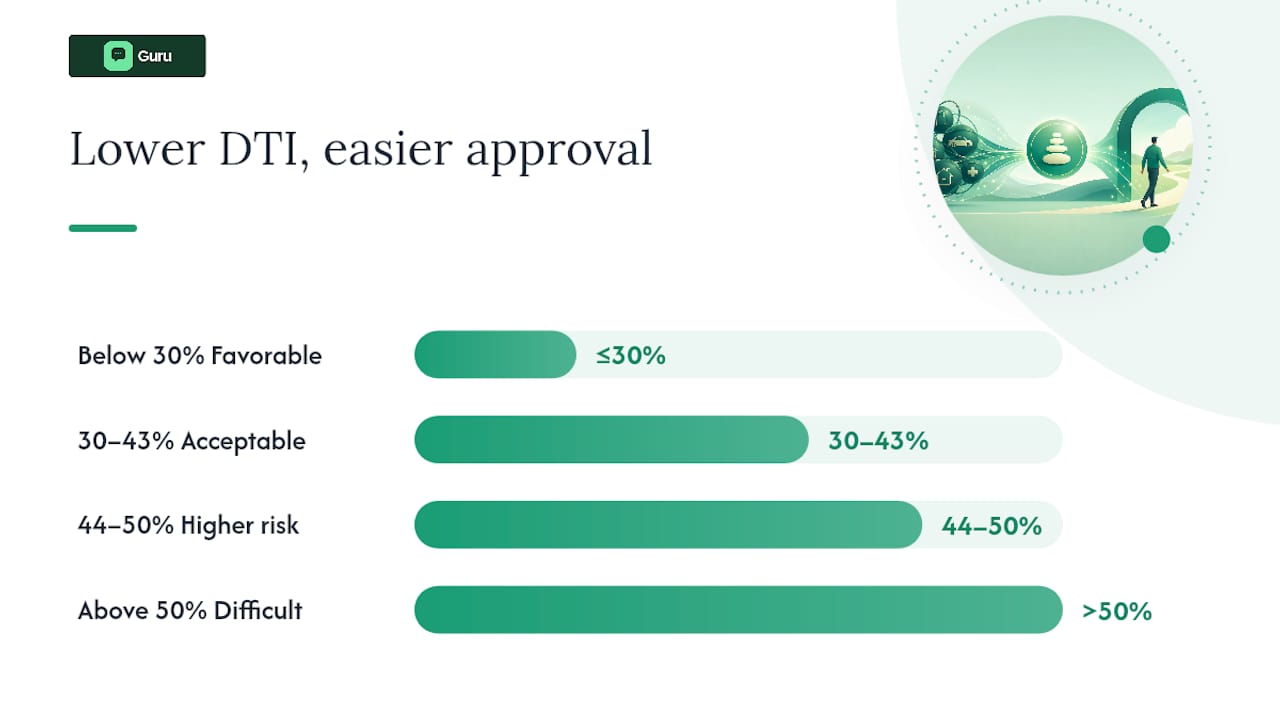
Debt that a manageable DTI is one of the core factors lenders consider, alongside credit score and income. Lower is always better, but DTI doesn’t operate in isolation. MoneyLion points out that some lenders will approve borrowers with higher DTI when other factors are strong, such as stable income, collateral, or a creditworthy co-signer. The key is that your new consolidation payment must fit within your budget after the loan closes.
Secured vs. unsecured consolidation loans: which requirements apply to you?
Secured loans lower lender risk, which can relax some credit and income requirements, but they put your asset on the line if you miss payments. Unsecured loans carry no collateral risk for you, but lenders compensate with stricter credit and income standards.
Common collateral types for secured consolidation loans:
- Vehicle lien: Your car or truck serves as security; lenders typically require the vehicle to have sufficient equity above any existing auto loan balance.
- Home equity: A home equity loan or HELOC can fund large consolidations at lower rates, but your home is at risk if you default.
- Savings pledge: Some credit unions allow a certificate of deposit or savings account as collateral for smaller secured loans.
Larger loan amounts often require collateral even from borrowers with good credit. Interest rates on secured loans tend to be lower because the lender has a recovery path if you default. Approval odds are also higher for borrowers with credit blemishes when collateral is involved, since the asset offsets some of the credit risk. Greenpath’s guidance on alternatives notes that home equity options are one path when an unsecured loan isn’t available.
Pro Tip: Before pledging collateral, calculate whether the interest savings on the secured loan outweigh the risk of losing the asset. If the rate difference is modest and you have any income instability, an unsecured option or a debt management plan may be the safer choice.

What documents should you have ready before applying?
Gather identity, income, address, bank, and debt account documents before you start any application. Having everything ready prevents delays and avoids the frustration of a lender pausing underwriting while waiting for a missing pay stub. Experian’s application checklist confirms that lenders typically request government ID, proof of address, pay stubs, bank statements, tax returns, and account payoff details.
Standard document checklist:
- Identity: Government-issued photo ID (driver’s license or passport)
- Residency/address: Recent utility bill, lease agreement, or bank statement showing your current address
- Income: Two most recent pay stubs; last two years of W-2s or federal tax returns
- Bank activity: Two to three months of recent bank statements
- Debts to consolidate: Account numbers, current balances, and payoff amounts for each debt you plan to roll in
- Self-employed additions: Profit and loss statement, 1099s, and business bank statements if applicable
Some lenders also request your Social Security number upfront for identity verification, even during prequalification. Keep digital copies of all documents organized in one folder so you can upload them quickly when a lender requests them.
How does the application process work from prequalification to funding?
Prequalify first using a soft pull, then choose offers, formally apply with a hard pull, move through underwriting, and receive funding. Knowing each step in advance prevents surprises and helps you move faster.
- Prequalify with a soft pull. Submit basic information (income, loan amount, purpose) to see estimated rates and terms. Experian explains that prequalification uses a soft inquiry that does not affect your credit score. Compare at least two or three offers before moving forward.
- Review and compare offers. Look at the APR (not just the interest rate), loan term, monthly payment, and any origination fees. Origination fees effectively reduce your loan proceeds and can offset interest savings if you don’t account for them.
- Submit a formal application. This triggers a hard credit pull, which can temporarily lower your score by a few points. Confirm with each lender exactly when the hard inquiry will occur before you submit.
- Complete underwriting. The lender verifies your documents, confirms employment, and may request additional information. Online lenders often complete this in one to three business days; banks and credit unions may take one to two weeks.
- Sign the loan agreement. Read the terms carefully, including prepayment penalties and late-fee policies, before signing.
- Receive funding. Online lenders often deposit funds within one to three business days of approval. Some lenders pay your creditors directly; others deposit the full amount into your account for you to pay off debts yourself.
Questions to ask a lender before accepting an offer:
- What is the total cost of the loan including all fees?
- Does the lender pay creditors directly or send funds to me?
- Is there a prepayment penalty if I pay off the loan early?
- When exactly does the hard credit pull occur?
Why do consolidation loan applications get denied, and what are your alternatives?
Denials usually come from high DTI, insufficient or unstable income, or serious credit derogatories. Understanding the specific reason matters because each has a different fix.
Common denial triggers:
- DTI too high: Your existing debt load leaves no room for a new payment at a rate that makes consolidation worthwhile.
- Recent collections or charge-offs: Active derogatory marks signal unresolved financial distress.
- Recent bankruptcy or foreclosure: Most lenders require a waiting period of two to seven years after a bankruptcy discharge before approving unsecured loans.
- Insufficient income documentation: Missing or inconsistent documents cause lenders to question income reliability.
- Very thin or very short credit history: Not enough data for the lender to assess risk accurately.
If you can’t qualify right now, these alternatives are worth considering:
- Debt management plan (DMP): A nonprofit credit counseling agency negotiates reduced interest rates directly with your creditors and sets up a structured repayment plan. Greenpath notes that credit counselors can sometimes negotiate rates directly with creditors when a borrower’s profile prevents favorable loan terms.
- Balance-transfer credit card: A 0% introductory APR card works well for smaller balances you can pay off within the promotional window, typically 12–21 months.
- Secured consolidation loan: Pledging collateral can open doors that unsecured lenders close. Review the CFPB’s guidance on consolidation trade-offs before committing to a home equity product.
- Credit counseling: A HUD-approved or NFCC-member counselor can review your full picture and recommend the path that fits your situation, at no or low cost.
Financial experts stress that a consolidation loan only makes sense if it lowers either your total interest paid or your monthly payment. If neither outcome is achievable with the offers you receive, one of the alternatives above may be the smarter move.
What actions actually improve your approval odds, and how long do they take?
Three high-impact actions move the needle fastest: lower your DTI, fix credit-report errors, and document your income more thoroughly. Each has a realistic timeframe.
- Dispute credit-report errors (2–6 weeks): Pull your free reports from AnnualCreditReport.com and dispute any inaccurate late payments, incorrect balances, or accounts that aren’t yours. Errors are more common than most borrowers expect, and a successful dispute can lift your score meaningfully.
- Pay down revolving balances (1–3 months): Reducing credit card utilization below 30% often produces a measurable score improvement within one to two billing cycles. Focus on the highest-utilization cards first.
- Add a co-signer or collateral (immediate effect at application): A creditworthy co-signer or pledged asset can offset a weaker credit profile or elevated DTI right away, without waiting months for score improvements.
- Organize income documentation (1–2 weeks): Self-employed borrowers who compile two years of tax returns, bank statements, and a current profit and loss statement before applying face far fewer underwriting delays.
- Avoid new credit applications (ongoing): Each hard inquiry temporarily dips your score. Hold off on applying for new cards or loans while you’re preparing to consolidate.
For a broader view of debt payoff strategies that complement consolidation, reviewing your overall repayment approach before applying can help you arrive with a lower balance and a stronger DTI.
Pro Tip: Use prequalification soft pulls at multiple lenders before you formally apply anywhere. Experian’s guidance confirms that soft pulls don’t affect your score, so you can compare likely offers from several sources and only trigger a hard pull at the lender whose terms you actually want.
What loan amounts can you typically borrow for debt consolidation?
Personal debt consolidation loans in the U.S. generally range from $1,000 on the low end to $100,000 at the upper end, though most unsecured personal loans top out between $35,000 and $50,000. The amount you can actually borrow depends on your credit profile, income, and DTI, not just the lender’s stated maximum.
Smaller loan amounts, under $5,000, are available from some credit unions and online lenders and suit borrowers consolidating a handful of smaller balances. Larger amounts, above $25,000, typically require a stronger credit profile or collateral. Home equity loans and HELOCs can fund consolidations well above $100,000, but they carry the risk of losing your home if you default. Match the loan amount to the actual payoff balances you need to cover, not to the maximum a lender will offer.
What age and residency requirements do lenders set?
You must be at least 18 years old to enter a loan contract in the U.S., and some states set the age of majority at 19 or 21 for certain financial products. Most lenders also require that you be a U.S. citizen or a lawful permanent resident with a valid Social Security number or Individual Taxpayer Identification Number (ITIN).
Non-permanent residents on certain visa types may find fewer lenders willing to approve an unsecured consolidation loan, since lenders factor in the risk that a borrower may leave the country before the loan is repaid. Some credit unions and community banks are more flexible on residency status than large national lenders. Regardless of citizenship status, you’ll need a verifiable U.S. address and a bank account in your name to receive funds and make payments.
How do bankruptcy, foreclosure, or existing debts affect your eligibility?
Recent financial hardships don’t automatically disqualify you, but they do narrow your options and raise your cost of borrowing. A Chapter 7 bankruptcy discharge typically requires a waiting period of two to four years before most unsecured lenders will consider an application. Chapter 13 may allow earlier access to credit if you’ve maintained a consistent repayment record under the plan.
Foreclosure carries a similar stigma in underwriting. Lenders view it as evidence that a borrower couldn’t manage a secured obligation, which makes them cautious about extending new unsecured credit. A foreclosure that’s more than three to four years old with a rebuilt credit history is less damaging than a recent one.
High existing debt balances, even without a bankruptcy or foreclosure, push your DTI up and reduce the loan amount you can qualify for. If your total monthly debt payments already consume more than half your gross income, a consolidation loan may not be available at a rate that actually saves you money. In that case, a debt management plan or credit counseling is the more realistic starting point.
How can you strengthen your eligibility before you apply?
The most effective preparation combines credit improvement, income documentation, and DTI reduction. None of these require months of waiting if you focus on the right levers.
Start by pulling your credit reports and correcting any errors. Then look at your credit utilization: paying down even one high-balance card can shift your score noticeably before your next billing cycle closes. If your DTI is the main obstacle, consider whether you can pay off any small balances entirely before applying, since eliminating a monthly payment reduces your DTI more efficiently than making partial payments across several accounts.

On the income side, gather all documentation now rather than scrambling after a lender requests it. Self-employed borrowers should have a current profit and loss statement ready alongside two years of tax returns. If your income has grown recently, make sure your most recent tax return reflects that growth; a strong recent year can offset a weaker prior year in some lenders’ calculations.
Finally, consider whether a co-signer makes sense. A co-signer with strong credit and low DTI can meaningfully improve your approval odds and the rate you’re offered, though they take on full legal responsibility for the debt if you stop paying.
An honest look at what the qualification process actually reveals
Most borrowers focus on their credit score when they think about debt consolidation loan requirements. The score matters, but it’s rarely the deciding factor on its own. What underwriters actually spend time on is the story your credit file tells: whether your payment problems are old or recent, whether your income has been consistent or erratic, and whether your current debt load leaves any room for a new obligation.
The borrowers who get denied most often aren’t the ones with the lowest scores. They’re the ones who apply before they’re ready, with incomplete documentation, a DTI that’s already at its ceiling, and recent derogatory marks they haven’t addressed. A few weeks of preparation, disputing errors, paying down one or two balances, and organizing documents, can move an application from a likely denial to a reasonable approval.
One thing the industry undersells: prequalification is genuinely useful, not just a marketing tool. Seeing estimated offers from multiple lenders without triggering hard pulls gives you real data about where you stand before you commit to anything. Use it.
How Lending Gurus helps you check your options without a hard credit pull
Sorting through debt consolidation loan eligibility on your own means researching lenders, guessing at rates, and risking hard pulls before you even know whether an offer makes sense. Lending Gurus cuts that process down significantly.
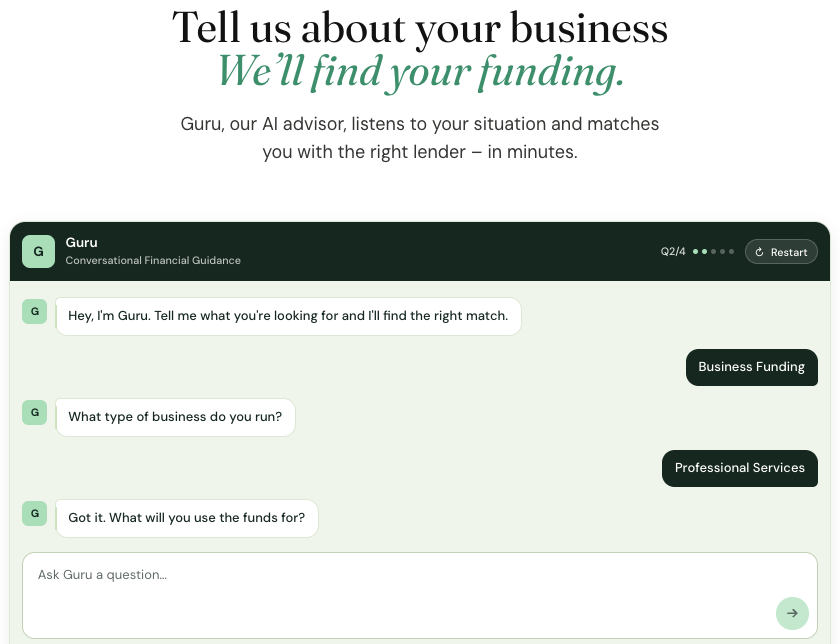
Guru, the free conversational tool on the Lending Gurus platform, listens to your situation and matches you to vetted lending partners without a hard credit inquiry. You describe what you’re consolidating, your income range, and your general credit picture, and Guru surfaces partners whose criteria align with your profile. You see estimated options, not guarantees. Partners set their own approval standards, rates, and loan amounts, and Lending Gurus does not control those decisions.
The value is in the comparison: you get a realistic picture of what’s available before you formally apply anywhere. When you’re ready to move forward, you’ll know which partner to commit to and when the hard pull will occur. Start the matching process at Lending Gurus or review how it works before you begin. Platform terms and disclosures are available at Lending Gurus’ Terms & Conditions.
This article provides general information only and is not a substitute for professional financial or legal advice. Confirm current lending requirements with your lender or a qualified financial professional.
Sources
Trusted public sources cover consumer lending rules, lender verification, and free counseling options. These are worth bookmarking before you apply.
