
Business loan refinancing makes sense when it lowers your total borrowing cost, reduces payment stress without piling on years of extra interest, or rolls several high-cost debts into one manageable payment. It rarely makes sense if you’re chasing a smaller monthly payment while ignoring fees, a longer term, or what happens to your collateral. Before you sign anything, run the math on total cost, not just the number due on the first of the month.
Table of Contents
- What Is Business Loan Refinancing and How Does It Work?
- Signs It’s Time to Refinance Your Business Loan
- How Do You Refinance a Business Loan Step by Step?
- What Do Lenders Look For When You Refinance?
- Can You Refinance an SBA Loan, and What’s Different?
- What Does Refinancing Actually Cost?
- How Long Does Business Loan Refinancing Take to Close?
- How Lending Gurus Fits Into the Refinancing Process
- What Business Owners Get Wrong About Refinancing
- Ready to Compare Lender Matches?
- Sources
- FAQ
What Is Business Loan Refinancing and How Does It Work?
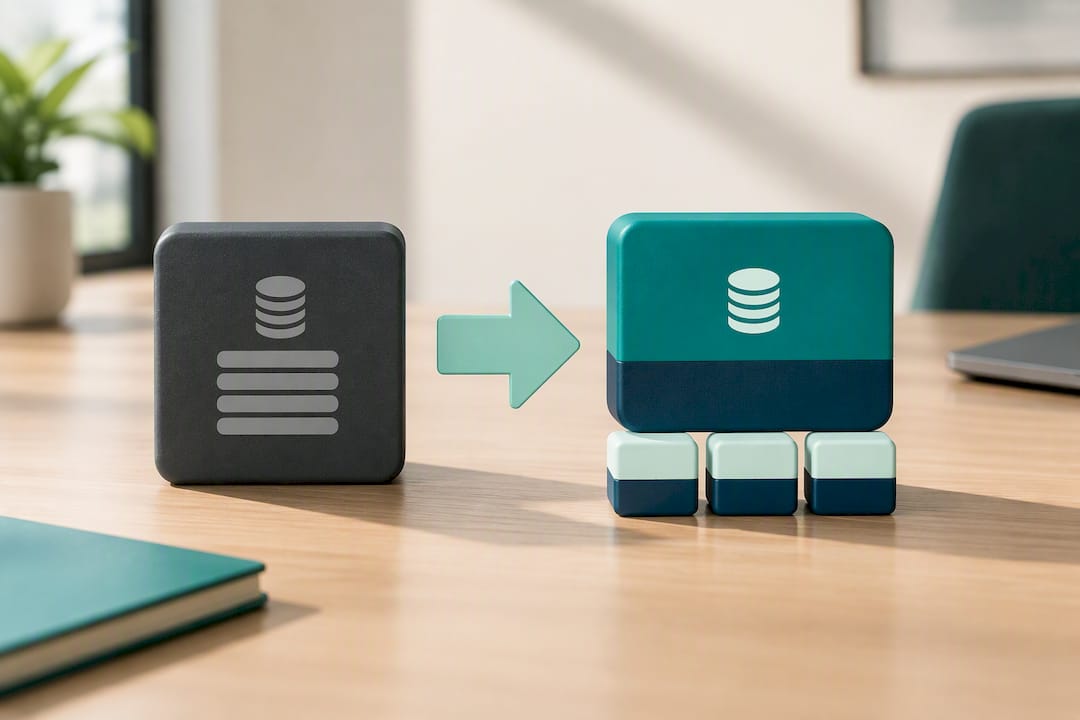
Business loan refinancing means replacing an existing business debt with a new loan, usually to get a better rate, a longer or shorter term, a different payment structure, or to combine multiple debts into one. You’re not erasing what you owe. You’re paying it off with new borrowed money, ideally on terms that fit your business better than the old ones did.
The replacement product depends on what you’re refinancing. A high-rate merchant cash advance often gets swapped for a term loan or line of credit. Equipment debt might move into new equipment financing with better depreciation timing. Unpaid invoices sitting on your books can sometimes support invoice financing instead of a costly short-term loan. The Federal Reserve’s review of small-business credit use found that businesses draw on a mix of products, and matching the replacement debt to its actual purpose tends to produce better outcomes than defaulting to whatever loan type is easiest to get approved for.
Pricing is where a lot of business owners get tripped up. An advertised rate is not the same as your effective cost once fees are added. And plenty of nonbank lenders use factor rates instead of APR, which makes side-by-side comparison harder unless you convert everything to the same measure first.
Common refinance paths include:
- Term loan to term loan: chasing a lower rate or longer amortization to ease monthly cash flow.
- Merchant cash advance to term loan: escaping daily or weekly withdrawals tied to a factor rate.
- Multiple debts to one loan: business debt consolidation that simplifies payments and can lower blended cost.
- Conventional loan to SBA loan: trading a shorter, pricier term for SBA-backed terms, when you qualify.
- Fixed-rate loan to line of credit: shifting from a lump sum to flexible, as-needed borrowing.
Signs It’s Time to Refinance Your Business Loan
Some signals are obvious. Others sneak up on you until your monthly obligations start eating into payroll.
- Rates have moved, or your business has improved. If market rates dropped since you took out your loan, or your revenue and credit profile have strengthened, you may now qualify for meaningfully better business loan interest rates than you did originally.
- You’re carrying high effective costs. Factor rates, origination fees, and daily withdrawal structures can push your real cost well above what the sticker rate suggests. If you’re not sure what you’re actually paying, that’s a sign to find out.
- You’re juggling multiple loans. Business loan consolidation options exist specifically for owners managing two or three separate payments with different due dates and different lenders.
- A balloon payment or covenant deadline is approaching. If a large lump sum is coming due, or you’re at risk of tripping a covenant, refinancing ahead of that deadline gives you more options than waiting until you’re in default.
- Your collateral situation has changed. Sold an asset, added one, or need to free up a lien for a new deal? That often forces the refinancing conversation.
Pro Tip: Pull your current loan’s amortization schedule before you shop for a refinance. Knowing exactly how much interest you’ve already paid, and how much principal remains, tells you whether a “better rate” actually saves money once you restart the clock.
Not every situation calls for refinancing. If your business is genuinely struggling to make any payment, restructuring the existing loan with your current lender, rather than taking on new debt, may be the safer move. Refinancing works best when your business is stable or improving, not when you’re trying to outrun a cash crunch.
How Do You Refinance a Business Loan Step by Step?
Refinancing isn’t complicated, but skipping a step here tends to cost you later. Here’s the sequence that keeps you from getting surprised.
- Set your goal and pick your metric. Decide upfront whether you’re optimizing for lower total cost, lower monthly payment, or debt consolidation. These sometimes conflict, and knowing which one wins keeps you from being talked into a longer term that “feels” cheaper.
- Get your payoff statements. Contact your current lender for an exact payoff amount, including any prepayment penalty, and confirm the conditions for releasing collateral.
- Shop and compare on equal terms. Convert every offer to the same basis: total borrowing cost over the life of the loan, not just the monthly figure.
- Prepare your documentation. Lenders will want to see your cash flow story clearly told through your financials.
- Apply and close. Once approved, the new lender pays off the old loan directly, or sends funds for you to do so immediately.
- Confirm the old loan is dead. Get written zero-balance confirmation and make sure any lien tied to the old loan is formally released.
When comparing offers, look past the headline number:
- Total cost over the full term, not just monthly payment
- Origination, application, and closing fees
- Prepayment penalties on the loan you’re leaving
- Covenants or restrictions attached to the new loan
- Payment frequency (monthly vs. weekly vs. daily withdrawals)
| What to Compare | Why It Matters |
|---|---|
| Total interest over full term | Lower payment can still mean more interest paid overall |
| Fees (origination, appraisal, legal) | Can offset most or all of a lower rate’s savings |
| Prepayment penalty on old loan | Sometimes makes refinancing a net loss |
| Lien release terms | Affects how fast you can use freed-up collateral |
| Payment schedule | Daily/weekly withdrawals hit cash flow differently than monthly |
Lenders and SBA servicing guidance treat lien subordination, collateral substitution, and prepayment as distinct servicing actions that can each add time to closing. Build that into your expectations before you assume a fast turnaround.
What Do Lenders Look For When You Refinance?
Lenders underwriting a refinance care most about one thing: can your business generate enough operating cash flow to make the new payment, reliably, month after month? The OCC’s commercial lending guidance is explicit that repayment ability from ordinary business operations, not credit score alone, drives the decision. Collateral matters, but it’s the backup plan, not the primary approval driver.
Expect lenders to look at your debt service coverage ratio (cash flow relative to debt payments) and your current ratio (short-term assets against short-term liabilities). If you can, bring a cash flow projection that shows how the new payment fits into your existing operating cycle. Lenders reviewing SBA-backed refinances are required to document the refinancing purpose and evaluate financial statements, projected income, financial ratios, collateral adequacy, and insurance coverage.
Have these ready before you apply:
- Current loan agreement and payoff statement
- Profit and loss statement (typically 2 to 3 years, plus year to date)
- Balance sheet
- Business tax returns
- Business bank statements (usually 3 to 6 months)
- Accounts receivable and accounts payable aging schedules
- Description of collateral being offered or released
- Personal financial statement, if a personal guarantee applies
Time in business and monthly revenue tend to carry more weight in this evaluation than your credit score does. A strong, consistent cash flow story with a shorter operating history often outperforms a longer history with choppy revenue.
Can You Refinance an SBA Loan, and What’s Different?
Yes, but SBA refinancing runs on its own rulebook, and 7(a) and 504 loans don’t follow identical eligibility standards. You generally need a clean, current payment history on the debt being refinanced, and certain existing SBA debt is excluded from being refinanced with another SBA loan under specific program conditions.
The 504 program’s refinancing provisions changed as of October 1, 2024, so rules that applied a couple of years ago may no longer be current. Don’t assume your research from a prior refinance attempt still holds.
Why SBA refinances take longer: SBA-backed deals often require extra administrative steps, including lien subordination or release, E‑Tran servicing notifications, and guaranty fee handling, that a conventional refinance simply doesn’t have. Build in more time than you’d expect for a straightforward bank-to-bank swap.
Before applying, check:
- Whether your current loan type is even eligible for the SBA program you’re targeting
- Your payment history over the required lookback period
- Whether the loan being refinanced falls under an SBA program exclusion
- Whether 7(a) or 504 fits your situation better given October 2024’s rule changes
Calling your prospective lender to confirm program fit before you submit paperwork saves weeks compared to finding out mid-application that your loan doesn’t qualify.
What Does Refinancing Actually Cost?
The fees attached to a refinance can quietly erase the savings you thought you were getting. Build a full cost comparison before committing, not just a rate comparison.
Costs to account for:
- Prepayment penalty on the loan being paid off
- Origination or underwriting fees on the new loan
- Appraisal fees (common with real estate or equipment-backed loans)
- Legal and title fees
- SBA guaranty fees, where applicable
- Any application or closing fees the new lender charges
A lower monthly payment feels like a win, but stretching a $200,000 balance from a 5-year term to a 10-year term can mean paying significantly more in total interest, even at a lower rate. Always compare total cost across the full life of both loans side by side.
There’s a tax angle too. Business interest deductions are subject to limits under Internal Revenue Code section 163(j), and refinancing can change how much interest you’re paying and when. Talk to a tax professional before assuming your interest deduction will look the same after refinancing as it did before.
Pro Tip: *Ask every lender for an itemized fee sheet before you compare offers.
One more wrinkle: commercial-financing disclosure requirements aren’t uniform nationwide. The CFPB has found that several state disclosure laws, including California, New York, Utah, and Virginia’s, apply to business lending independent of federal Truth in Lending Act rules. What your lender is required to disclose can depend on where your business operates.
How Long Does Business Loan Refinancing Take to Close?
A straightforward conventional refinance can move in a few weeks once documentation is complete. Anything involving real estate, equipment appraisals, or SBA guarantees usually takes longer, often stretching into two or three months.
What commonly slows things down:
- Appraisals: real estate and equipment-backed refinances need current valuations, and scheduling alone can eat a week or two.
- Environmental checks: required for certain commercial real estate transactions, adding both time and cost.
- Lien releases: your old lender has to formally release its claim before the new lender can secure its position.
- SBA or investor approvals: added review layers mean added waiting, particularly with 7(a) and 504 files.
Once you close, the work isn’t quite finished. Confirm the payoff on your old loan actually processed, request written UCC termination or a lien release, and check that your old account shows as closed, not just paid down. Servicing records treat lien release as a distinct, documented action, not an automatic byproduct of payoff, so don’t assume it happens without you asking.
How Lending Gurus Fits Into the Refinancing Process
Once you know your goal and have your documents together, finding the right lender is the next hurdle. There are platforms that listen to your situation and match you with vetted lending partners, without a hard credit pull.
Here’s the boundary worth understanding: These platforms don’t approve loans, set rates, or decide terms. Those decisions belong entirely to the lending partner. Such services speed up the search so you’re not cold-applying to lender after lender hoping one fits.
The order matters. Do your prep work first: know your refinancing goal, pull your payoff statement, gather your financials. Then use Guru to surface matches suited to your situation. Walking in with clear numbers and clear goals gets you better-fitted matches than walking in with just “I want a better rate.”
What Business Owners Get Wrong About Refinancing
Before you refinance anything, run through one checklist: confirm your goal, get your exact payoff amount including penalties, list every fee on the new offer, compare total cost across lenders rather than just rate, and verify in writing that your old lien gets released.
Two mistakes show up over and over. The first is confusing a lower monthly payment with a lower total cost. Stretching the term almost always increases total interest paid, even when the rate drops. The second is closing a refinance and assuming the lien on the old loan disappeared automatically. It doesn’t. You have to request that confirmation, and until you have it in writing, your collateral is still technically encumbered by the old debt.
— Chris
Ready to Compare Lender Matches?
You’ve done the hard part: figured out your goal, pulled your payoff statement, and organized your financials. The next step is finding lenders who actually fit your numbers instead of spending weeks submitting the same documents to lender after lender. Some matching platforms are built for the gap between “I know what I need” and “I don’t know who offers it.”

Guru, the conversational advisor, asks about your revenue, time in business, and cash flow, then matches you to vetted lending partners without a hard credit pull. It’s free to use, and there’s no obligation to accept any match you get. Lending Gurus doesn’t decide your rate or approve your loan; the lending partners you’re matched with make those calls based on their own underwriting. If you’re weighing several loan types for your refinance, whether that’s a term loan, a line of credit, or debt consolidation, starting a conversation with Guru on the Lending Gurus platform is a faster way to see what’s realistically available to your business than applying blind to one lender at a time.
This article is general information, not a substitute for advice from a qualified financial advisor. Consult a qualified financial professional about your own circumstances before acting on anything here.
Sources
- IRS updates FAQs about the limitation on the deduction for business interest expense
- Federal Reserve — Consumer & community context (March 2025)
- OCC examination handbook — Other commercial lending
- CFPB determination on state commercial financing disclosure laws
FAQ
What Is the Monthly Payment on a $50,000 Business Loan?
The payment depends entirely on your rate, term, and payment structure, which vary by lender and loan type. Rather than relying on a generic estimate, ask each lender you’re comparing for their specific amortization schedule so you can see real numbers side by side.
What Is the “2% Rule” for Refinancing?
For business debt, the better measure is your actual total cost comparison, including fees and prepayment penalties, rather than a fixed percentage threshold.
What Is the “20% Rule” for SBA Loans?
SBA eligibility and refinancing conditions vary by program and were revised for 504 loans effective October 1, 2024, so check current program rules directly rather than relying on a rule of thumb.
What Is the Payment on a $1,000,000 Business Loan?
As with smaller loan amounts, the payment on a $1 million business loan depends on the rate, term, and structure your specific lender offers. Loans at this size are more likely to involve SBA 504 or conventional commercial real estate financing, both of which carry their own underwriting timelines and fee structures worth comparing carefully.
Does Refinancing Hurt My Business Credit Score?
Applying for new financing can generate an inquiry that affects your credit profile, though the impact varies by bureau and lender. Using a matching tool like Guru through Lending Gurus, which doesn’t perform a hard credit pull, lets you explore lender matches before committing to a formal application.
