
TL;DR:
- Invoice factoring allows businesses to turn unpaid invoices into immediate cash by selling receivables to a third party. Factors typically advance 80% to 95% of invoice value within 24 to 48 hours, with fees ranging from 1% to 5% based on industry and creditworthiness. Factors prioritize customer credit data over business financials, making factoring accessible for startups with creditworthy clients.
The fastest way to find the best invoice factoring companies for your business is to use a vetted matching service like Lending Gurus’ Guru tool, which connects you to multiple factoring partners without a hard credit pull. Industry norms in 2026 show advance rates typically ranging from 80% to 95%, with funds often delivered within 24–48 hours after invoice submission — and because factoring is a sale of accounts receivable, not a loan, even startups with creditworthy customers can often qualify.
Get started in two steps:
- Gather your top three open invoices and your customers’ basic contact and payment history.
- Use Guru at Lending Gurus to get matched to vetted factoring partners in minutes, with no obligation.
Table of Contents
- What is invoice factoring and how does it actually work?
- Recourse vs. non-recourse factoring: what changes for your risk?
- Which businesses benefit most from invoice factoring?
- How much does invoice factoring cost?
- What do factoring companies look for when you apply?
- Bank-owned vs. non-bank factors: which type fits your situation?
- How do you choose the right invoice factoring provider?
- What does the application and funding process look like?
- When should you consider alternatives to invoice factoring?
- A practical perspective on finding the right factoring match
- How Lending Gurus connects you to vetted factoring partners
- Sources and further reading
What is invoice factoring and how does it actually work?
Invoice factoring is the sale of your unpaid B2B invoices to a third party (the factor) in exchange for immediate cash. Invoice factoring involves selling your unpaid invoices to a third party in exchange for immediate cash, effectively converting an asset you already own.
Here is the typical flow:
- You submit an invoice to the factor who advances 80%–95% of the invoice face value, often within a short timeframe like 24–48 hours.
- The factor collects payment directly from your customer.
- Once your customer pays, the factor releases the remaining balance (the reserve) minus its fee.
Factoring can be structured as a one-off spot transaction or an ongoing facility that scales with your sales volume. Facility sizes in the industry range from roughly $250,000 to $100 million. Fees are typically expressed as a percentage of the invoice face value per period or as a flat discount rate per invoice, typically ranging from 1%–5% depending on provider and industry.
Pro Tip: If your customers pay in 30 days or less, your effective factoring cost is much lower than the stated monthly rate suggests. Always ask for the per-invoice rate, not just the monthly rate.
Recourse vs. non-recourse factoring: what changes for your risk?
With recourse factoring, you buy back the invoice if your customer does not pay. With non-recourse factoring, the factor absorbs the credit loss if the customer becomes insolvent. That single difference reshapes who carries the risk.
Key tradeoffs:
- Non-recourse programs are typically more expensive and harder to qualify for because the factor takes on credit risk.
- Recourse factoring is more common, more affordable, and available across more industries.
- Customer creditworthiness is the critical underwriting variable in both structures.
Pro Tip: Read recourse clauses carefully. Some contracts include unlimited repurchase obligations or short cure windows (as few as 60 days). Ask specifically: “Under what conditions am I required to repurchase an invoice, and what is the timeline?”
Which businesses benefit most from invoice factoring?
Factoring fits businesses with creditworthy B2B customers, recurring invoice volume, and a cash cycle that creates gaps between delivery and payment. The most common fits:
- Staffing agencies covering weekly payroll while clients pay on net-30 or net-60 terms.
- Trucking and freight brokers needing fuel and driver pay before freight bills clear.
- Manufacturers and distributors with large purchase orders and slow-paying retail or wholesale buyers.
- Government subcontractors waiting on long federal payment cycles.
- B2B service providers billing on project completion with extended payment terms.
Understanding invoice payment terms is the first step to knowing whether factoring closes your cash gap or whether a different product fits better.
Pro Tip: Factoring works best when your customers are established businesses with solid payment histories. A factor will check your customers’ credit, not just yours.

How much does invoice factoring cost?
Fees vary by industry, invoice volume, and customer credit quality. Common fee types include:
- Discount rate: a percentage of the invoice face value, charged per invoice or per 30-day period.
- Flat invoice fee: a fixed dollar amount per invoice processed.
- Minimum monthly fee: a floor charge if your volume falls below the contracted minimum.
- Origination or setup fee: a one-time charge to establish the facility.
- Reserve holdback: the portion withheld until customer payment (typically 5%–25%).
2026 industry rate ranges by vertical (per 30 days):
| Industry | Typical rate range |
|---|---|
| Government contracts | 0.5%–1.5% |
| Staffing | 1.0%–2.5% |
| Manufacturing | 1.0%–2.0% |
| Trucking | 1.5%–3.0% |
| Construction | 2.0%–3.5% |
Example: You submit a $10,000 invoice. The factor advances 90% ($9,000). The fee is 1%–5% per 30 days, depending on your industry and customer credit. Your customer pays in 30 days. The factor releases the $1,000 reserve minus the factor fee. You receive the invoice amount minus the factor fee, after the factor collects payment and releases the remaining balance.
Watch for hidden costs: minimum volume penalties, automatic contract renewals, and ancillary charges like fuel-card fees in trucking programs.
Pro Tip: Ask for an all-in cost example using your average invoice size and your customers’ typical payment window. That number is what you actually pay.
What do factoring companies look for when you apply?
Factors underwrite your customers more than your own financials. A startup with creditworthy clients can qualify even without audited tax returns or a long operating history. That is what makes factoring accessible when a bank line of credit is not.
Standard documents factors typically request:
- Copies of open invoices and aging report.
- Customer contact information and payment history.
- Proof of delivery or completed services.
- Business formation documents (articles of incorporation, EIN).
- Bank statements (typically 3 months).
| Requirement | Typical threshold |
|---|---|
| Minimum invoice size | $1,000 (many programs) |
| Minimum monthly receivables | Varies; often around $10,000 |
| Time in business | No minimum for many programs |
| Customer credit | Creditworthy B2B obligors required |
Trucking and medical AR programs often have specialized documentation requirements (BOLs, EOBs) that differ from standard commercial invoices.
Bank-owned vs. non-bank factors: which type fits your situation?
Bank-owned factors tend to offer lower fees but apply stricter underwriting criteria. Non-bank factors are more flexible on approvals but may charge higher rates. Neither is universally better.
| Dimension | Bank-owned factor | Non-bank factor |
|---|---|---|
| Advance rate | typically around 90% | typically around 90% |
| Fee / discount rate | Lower | Moderate to higher |
| Recourse options | Often recourse only | Both recourse and non-recourse |
| Minimum volume | Higher | Lower |
| Funding speed | 1–3 days after setup | 24–48 hours after setup |
| Onboarding friction | Higher (more documentation) | Lower |
Choose a bank-owned factor when you have clean financials, strong customer credit, and time to go through a thorough underwriting process. A non-bank factor makes more sense when you are early-stage, need fast onboarding, or your documentation is incomplete.
How do you choose the right invoice factoring provider?
Start with this prioritized checklist before you talk to any provider:
- Does the factor specialize in your industry?
- What is the advance rate, and is it guaranteed or conditional?
- How is the fee structured (per invoice, per 30 days, flat)?
- Is the contract recourse or non-recourse?
- What is the minimum monthly volume, and what happens if you fall short?
- How fast is first funding after account setup?
- Does the platform offer online invoice submission and real-time reporting?
- How does the factor communicate with your customers during collections?
- What are the contract length and exit terms?
- Are there any ancillary fees (fuel cards, wire fees, credit check fees)?
Editorial reviews consistently weight advance size, fee transparency, vertical specialization, and account management tools when ranking top factoring services. Use those same criteria when comparing offers.
Red flags: undisclosed fees discovered after signing, mandatory multi-year lock-ins with no early exit, vague reserve reconciliation timelines, and aggressive repurchase clauses with short cure windows.
Pro Tip: Negotiate the minimum monthly volume requirement down before signing. Factors often have flexibility here, especially for new accounts. A lower minimum protects you during slow months without penalty.
What does the application and funding process look like?
| Stage | Best case | Typical | Slower scenario |
|---|---|---|---|
| Pre-qualification | Same day | 1–2 days | 3–5 days |
| Document review / underwriting | 1–2 days | 3–5 days | 1–2 weeks |
| First invoice funded | 24 hours after setup | 24–48 hours | 3–5 days |
| Full facility operational | 1 week | 2–3 weeks | 4+ weeks |
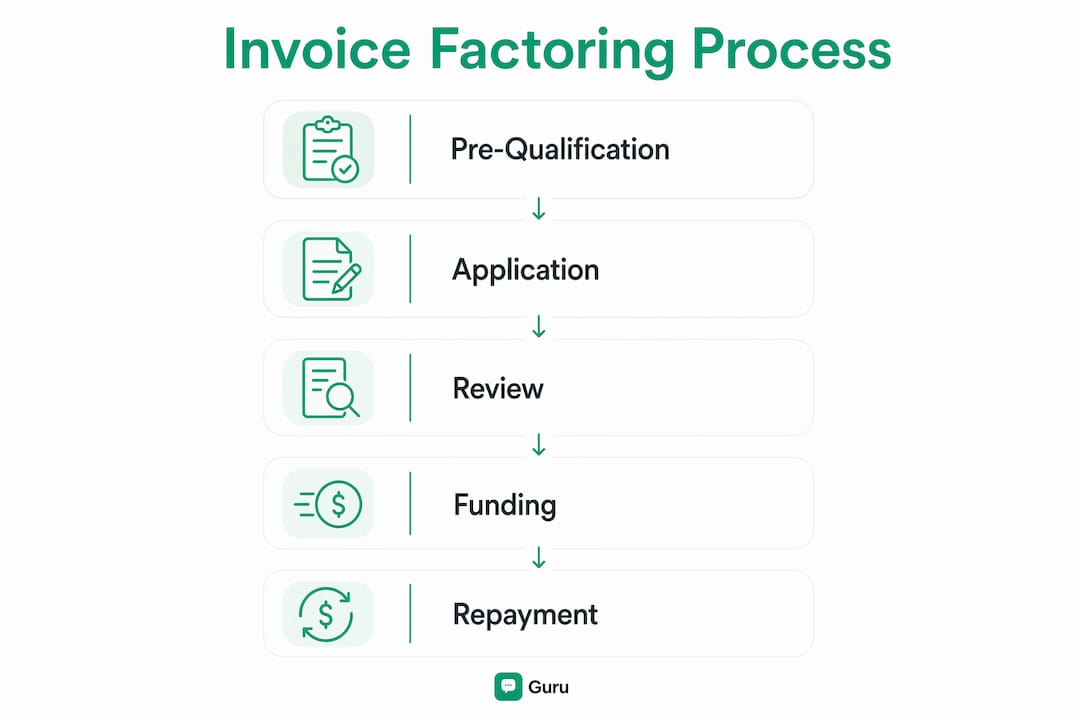
Delays most often come from missing proof-of-delivery documents, customer disputes on open invoices, or complex billing cycles (common in construction and healthcare). Preparing a clean invoice package before you apply cuts setup time significantly.
When should you consider alternatives to invoice factoring?
Factoring is faster than a bank line of credit but typically costs more. Here is a quick comparison of the main alternatives:
| Alternative | Speed | Cost | Best fit |
|---|---|---|---|
| Line of credit | Days to weeks | Lower | Established firms with strong credit |
| Asset-based lending | 1–4 weeks | Moderate | Firms with large AR and inventory |
| Invoice financing (AR loan) | Days | Moderate | Firms that want to retain collections |
| Merchant cash advance | 1–2 days | High | Retail/B2C with card revenue |
| Early-pay platforms | Varies | Low | Firms with large-buyer relationships |
Pick an alternative when you have good personal and business credit, audited financials, and a longer-term financing need where the lower cost of a credit facility outweighs factoring’s speed advantage. If you are a pre-revenue or early-stage firm still building your receivables base, a line of credit may not yet be accessible, which is exactly where factoring’s customer-credit underwriting model helps.
A practical perspective on finding the right factoring match
Lending Gurus is a matching platform, not a lender or factor. Guru connects you to vetted lending partners; those partners set their own rates, approval criteria, and terms. No approval is guaranteed, and no specific rate or timeline is promised.
That said, here is what actually moves the needle when you are comparing factoring offers: your customers’ payment history matters more than your own credit score. Prepare a short list of your top five customers, their average invoice size, and their typical days-to-pay before you fill out any application. That information is what factors use to price your deal.
For early-stage firms, selective (spot) factoring on your strongest invoices is a lower-risk way to test a provider before committing to a full facility. Compare at least two or three offers before signing anything, and run each offer through the 10-question checklist above.
Pro Tip: When you use Guru, have your three largest open invoices and your customers’ basic business details ready. The more specific your inputs, the better the match quality.
How Lending Gurus connects you to vetted factoring partners
Skip the cold calls and the rate-shopping spreadsheets. Lending Gurus gives you a free matching tool that connects you to vetted factoring partners in minutes, with no hard credit pull and no obligation to accept any offer.
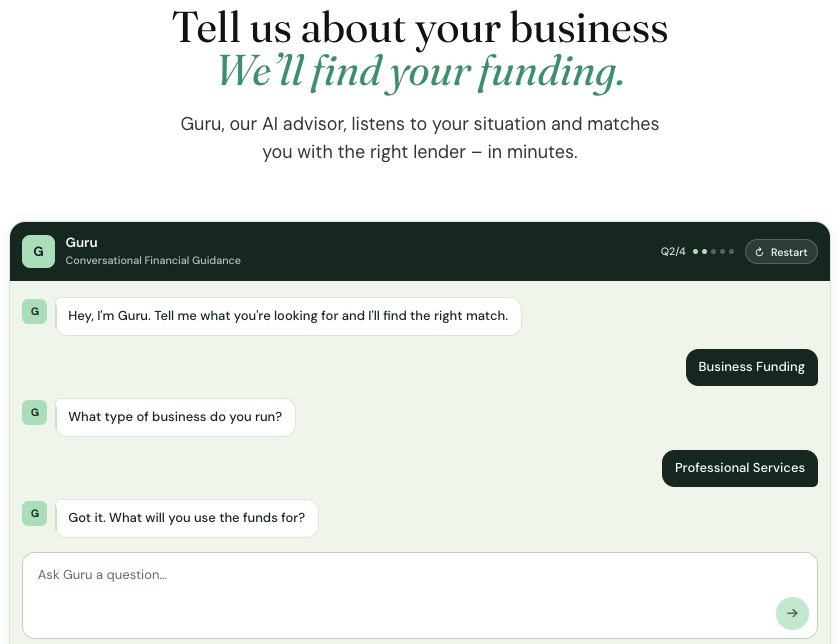
Partners on the Lending Gurus platform cover a range of industries, advance rates, and contract structures. You get multiple offers to compare side by side, using the same criteria this article laid out.
How to get started:
- Gather your open invoices and your customers’ contact and payment details.
- Complete the Guru form at Lending Gurus — it takes a few minutes and requires no hard credit pull.
- Review your matched offers and run each one through the checklist in this article before you sign.
Lending Gurus does not guarantee approvals, rates, or funding timelines. Partners supply those. Review the terms and conditions before proceeding.
This article is general information, not financial or legal advice. Confirm current rates, terms, and eligibility with any factoring provider or a qualified financial advisor before committing.
Sources and further reading
| Source | What it supports | URL |
|---|---|---|
| Serve Funding | Advance rates, timing, facility sizes, bank vs. non-bank tradeoffs | servefunding.com |
| Integra Funding | Underwriting lens (customer credit focus), startup eligibility | integrafunding.com |
| PeerSense | Vertical pricing bands, alternatives comparison, customer credit emphasis | peersense.com |
| Elite Funders | Program minimums, no-minimum-time-in-business programs, funding speed | elitefunders.com |
| Investopedia | Editorial evaluation criteria for ranking factoring providers | investopedia.com |
- Serve Funding backs the BLUF advance-rate and timing claims, the facility-size range, and the bank vs. non-bank section.
- Integra Funding supports the eligibility section and the “factoring is a sale, not debt” insight.
- PeerSense supports the vertical pricing table, the alternatives comparison, and the customer-credit underwriting emphasis.
- Elite Funders supports the eligibility table (minimum invoice size, no time-in-business requirement).
- Investopedia supports the evaluation criteria checklist in the how-to-choose section.
