
Yes, you can prequalify without a hard pull. Most personal lenders, many credit card issuers, and several loan marketplaces run a soft credit check during prequalification, which leaves your credit score completely untouched.
Here is who commonly offers soft-pull prequalification and where it may not be available:
- Personal loan lenders and online platforms: Most offer a dedicated “check your rate” or “prequalify” tool that uses only a soft inquiry. Prequalification typically takes minutes and requires basic personal details like your name, income, and Social Security number.
- Credit card issuers: Many major issuers let you check for pre-approved offers using a soft pull, with no score impact.
- Loan marketplaces and matching services: These generally use soft checks to surface multiple lender offers at once.
- Mortgage preapproval: This is the main exception. Formal mortgage preapproval almost always triggers a hard inquiry because lenders must verify your full credit file before issuing a conditional commitment.
Pro Tip: Before you enter any personal information on a lender’s prequalify or “check your rate” page, scroll to the bottom and look for explicit language like “checking your rate won’t affect your credit score.” If you don’t see that disclosure, don’t assume it’s a soft pull.
Table of Contents
- What’s the difference between prequalification, preapproval, and prescreen?
- How does a soft credit pull differ from a hard pull, and what does each do to your score?
- Can lenders actually prequalify you without a hard pull?
- How do you prequalify without a hard pull, step by step?
- When will a lender still require a hard pull?
- How do you shop across lenders without hurting your credit?
- Why soft-pull prequalification is the smart first step
- Lending Gurus makes finding soft-pull options faster
- Authoritative sources and further reading
What’s the difference between prequalification, preapproval, and prescreen?
These three terms get used interchangeably, but they mean different things and carry different credit consequences.
Prequalification is an estimate. You provide basic financial details, the lender runs a soft credit check, and you receive a conditional offer showing a likely loan amount and rate range. Nothing is verified yet. Because it relies on self-reported data, the terms can change once the lender verifies your income and documents during the formal application.
Preapproval is a stronger conditional commitment. Lenders verify more of your information, and for mortgages, this almost always means a hard inquiry. For personal loans, some lenders use “preapproval” and “prequalification” interchangeably, so always check the disclosure language rather than the label.

Prescreen is different from both. A lender or credit bureau pulls a list of consumers who meet certain criteria and sends them unsolicited offers, typically by mail. You did not initiate it, and it does not affect your score. You can opt out of prescreened offers at optoutprescreen.com.
Here is a quick comparison:
- Prequalification: Soft pull, self-reported data, estimate only, initiated by you.
- Preapproval: Often a hard pull (especially for mortgages), verified data, conditional commitment, initiated by you.
- Prescreen: Soft pull, lender-initiated, unsolicited offer, no action required from you.
A practical example: You prequalify with a personal lender and see a rate estimate of 12%. When you formally apply and the lender verifies your income, they find your debt-to-income ratio is higher than reported. The final offer comes back at 15%, or the application is declined. Prequalification protects your score during shopping; it does not lock in a rate.
How does a soft credit pull differ from a hard pull, and what does each do to your score?
A soft pull has zero effect on your credit score. A hard pull creates a small, temporary dip and stays visible on your credit report for two years.

| Attribute | Soft Pull | Hard Pull |
|---|---|---|
| Effect on FICO/VantageScore | None | Small, temporary decrease |
| Visible to other lenders | No | Yes, for up to two years |
| Initiated by | You or a lender (without your application) | You, via a formal application |
| Typical uses | Prequalification, background checks, account reviews | Formal loan/card applications, mortgage underwriting |
| Can be used for prequalification | Yes | Rarely (usually formal application stage) |
Hard inquiries remain on your credit report for two years, and multiple hard pulls in a short window can amplify the score impact. The FICO scoring model does group mortgage and auto loan inquiries made within a short rate-shopping window, treating them as a single inquiry, but this grouping does not apply to personal loans in the same way.
Two cautions worth knowing. First, some lenders describe their process as a “soft check” in marketing copy but trigger a hard inquiry at a step you did not expect, such as identity verification. Second, if a lender’s prequalification page does not explicitly state that checking rates won’t affect your credit score, do not assume a soft pull is being used. Read the disclosure before you submit anything.
Can lenders actually prequalify you without a hard pull?
Many can, but availability varies by lender type and product. Most personal lenders, lending marketplaces, and many credit card issuers offer prequalification with a soft credit check, though not every lender has built this option into their process.
| Lender category | Typical behavior | How to confirm |
|---|---|---|
| Online personal lenders | Most offer a soft-pull “check your rate” tool | Look for explicit disclosure on the prequalify page |
| National banks | Varies widely; some offer soft-pull tools, others go straight to application | Call or check the FAQ before submitting |
| Credit unions | Often offer prequalification with a soft check for members | Ask a loan officer directly |
| Loan marketplaces | Generally use soft pulls to surface multiple offers | Check the marketplace’s terms or disclosure page |
| Mortgage lenders | Preapproval almost always requires a hard pull | Expect a hard inquiry; shop within a short window to limit impact |
What to look for on a prequalify page: phrases like “check your rate,” “see if you qualify,” or “this won’t affect your credit score” are strong signals that the process uses a soft pull. A page that says “apply now” with no soft-pull disclosure is likely sending you straight to a formal application.
The mortgage exception is real and worth planning for. The CFPB notes that mortgage lenders typically pull your credit as part of the preapproval process, which means a hard inquiry. If you are mortgage shopping, submit applications to multiple lenders within a short period so the inquiries are treated as a single event by the scoring models.
How do you prequalify without a hard pull, step by step?
Start by looking for explicit language. Any lender page that says “checking your rate won’t affect your credit score” or “soft credit check” is your green light. If you don’t see that language, stop and confirm with the lender before proceeding.
- Gather your information. Have your gross annual income, employment status, monthly housing payment, and Social Security number ready. Accurate self-reported data gives you a more reliable estimate and reduces the chance of a surprise when the lender verifies documents later.
- Use each lender’s dedicated prequalify tool. Go directly to the lender’s site and find the “check your rate” or “prequalify” page, not the general “apply” button. Confirm the soft-pull disclosure before entering data.
- Use a loan marketplace or matching service. Platforms that match you to multiple lenders at once can surface several offers with a single soft pull, saving time and reducing the number of forms you fill out.
- Record every offer in one place. Note the estimated APR range, loan amount, term, origination fee, and any prepayment penalty for each offer. Comparing these side by side is the only way to judge true cost.
- Choose one lender to formally apply with. Once you have compared prequalified offers, submit a single formal application to the lender whose terms best fit your situation. That is the one hard pull you accept.
Prequalification is not the finish line — it is the research phase. Treat it as a way to decide which hard pull is worth taking, not as a loan offer you can act on immediately. Partners make final approval decisions based on verified information, and terms can change.
Pro Tip: When you land on a prequalify page, use Ctrl+F (or Command+F on Mac) to search for the word “soft” or “won’t affect.” If neither appears anywhere on the page, call the lender’s customer service line and ask directly before submitting your Social Security number.
Lending Gurus’ Guru tool fits naturally at step 3. Guru matches you to vetted lending partners without a hard credit pull on Lending Gurus’ side, helping you surface options quickly. Keep in mind that partner lenders make all final decisions on approvals, rates, and terms.

When will a lender still require a hard pull?
A hard inquiry becomes unavoidable at specific points in the lending process. Knowing when to expect it lets you plan rather than be caught off guard.
The trigger is almost always the formal application or underwriting stage. Once you move from “checking your rate” to “submitting your application,” the lender needs to verify your full credit file, and that requires a hard pull.
Common trigger events:
- Formal loan application submission: The moment you click “submit” on a full application, most lenders pull your credit report.
- Income and document verification: Some lenders run a hard pull when they begin verifying pay stubs, tax returns, or bank statements.
- Final rate lock (mortgages): Mortgage lenders often pull credit again at closing to confirm nothing has changed since preapproval.
- Identity verification for underwriting: Certain lenders require a hard pull as part of fraud prevention during underwriting.
A rough timeline for personal loans: soft pull at prequalification (day 0), hard pull at formal application (day 1 or later), funding decision within a few business days of application. For mortgages, the hard pull typically happens at preapproval, then sometimes again just before closing.
The practical takeaway: use soft-pull prequalification to narrow your list to one or two lenders, then accept the hard pull only when you are ready to move forward with that specific lender.
How do you shop across lenders without hurting your credit?
You can compare offers from multiple lenders using only soft pulls, then submit a single formal application to the one you choose. Prequalification is designed exactly for this purpose: checking multiple lenders without damaging your credit.
Use this checklist when shopping:
- Start with lenders that explicitly advertise soft-pull prequalification. Online personal lenders and loan marketplaces are the most reliable starting point.
- Prequalify with at least three lenders. One offer gives you no comparison. Three gives you a real picture of the rate range you qualify for.
- Record these terms for every offer: estimated APR, loan amount, origination fee, loan term, monthly payment estimate, and prepayment penalty.
- Prioritize effective cost, not just rate. A loan with a lower APR but a high origination fee can cost more than a slightly higher-rate loan with no fee.
- Check lender reputation and funding speed if timing matters for your situation.
Pro Tip: Build a simple spreadsheet with one row per lender and columns for APR, fee, term, and total estimated cost. The total cost column (monthly payment × number of months + origination fee) is the single most useful number for comparing offers.
When you are ready to choose, ask yourself: Which lender offered the lowest total cost? Which had the most transparent terms? Which had no prepayment penalty if you plan to pay off early? The answers point you to the one formal application worth submitting.
Why soft-pull prequalification is the smart first step
Skipping prequalification and going straight to a formal application is one of the more avoidable credit mistakes borrowers make. You accept a hard inquiry before you know whether the lender’s terms are competitive, and if you repeat that across three or four lenders, the cumulative effect on your score is real.
The smarter sequence is to use soft-pull prequalification as a comparison tool across multiple lenders, narrow your list based on estimated rates and fees, and then commit one hard pull to the lender whose terms you have already vetted. That approach costs you nothing in credit score terms during the research phase.
One thing borrowers often underestimate: prequalification reveals more than just rate. It shows you how a lender communicates, how clear their disclosures are, and whether their process feels trustworthy. A lender that buries its soft-pull disclosure or makes it hard to find the prequalify page is giving you information about how they operate.
Lending Gurus’ role in this process is as a matching layer, not a lender. Guru surfaces vetted lending partners based on your situation, without a hard pull on Lending Gurus’ side. Partners make all final decisions. That distinction matters for how you use the tool: treat it as a way to expand your comparison set quickly, not as a loan approval.
Lending Gurus makes finding soft-pull options faster
Comparing lenders one by one is time-consuming. Guru, Lending Gurus’ free matching tool, connects you to vetted lending partners in minutes, without a hard credit pull on Lending Gurus’ side. You describe your situation, and Guru surfaces lenders whose products fit, so you spend less time hunting and more time comparing real offers.
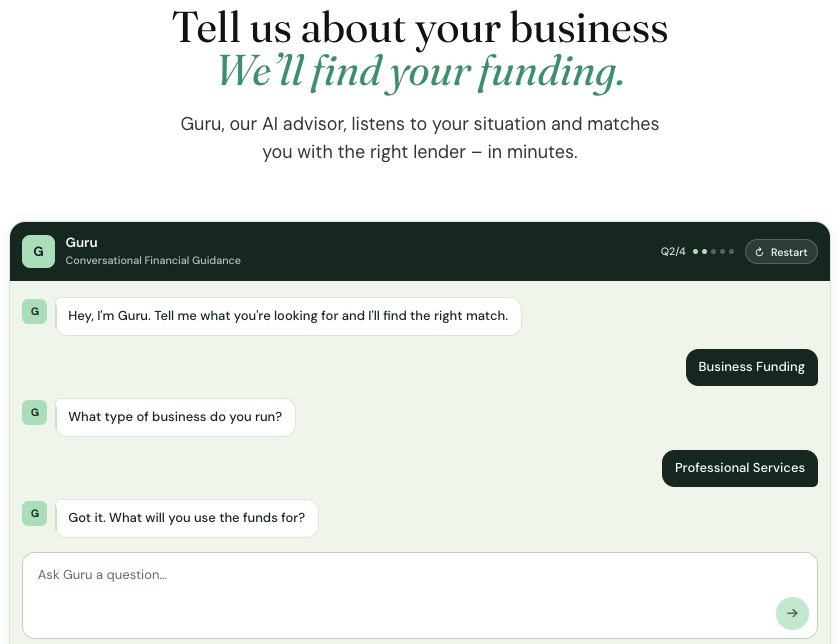
Lending Gurus is a lead-matching service. Partner lenders make all decisions on approvals, rates, and terms. No approval is guaranteed, and no specific rate or amount is promised. What you get is a faster path to the comparison stage, so you can make an informed choice about which single application is worth the hard pull.
Ready to see which lenders match your situation? Start with Guru at Lending Gurus and review the terms and conditions to understand exactly how the matching process works.
Authoritative sources and further reading
These are the primary sources cited in this article. Each one is worth bookmarking if you want to verify definitions or dig deeper into a specific topic.
- How Lending Gurus Works — Explains how Guru matches users to lending partners without a hard credit pull on Lending Gurus’ side.
This article is general information, not financial or legal advice. Confirm current lender policies and credit reporting rules with the CFPB, your credit bureau, or a qualified financial professional before making borrowing decisions.
