
A secured business line of credit is a revolving loan backed by collateral like equipment or real estate. It usually offers lower rates and higher limits than an unsecured line but risks loss of the asset. Personal guarantees are often still required.
Table of Contents
- What Is a Secured Business Line of Credit and How Does It Work?
- How Does a Secured Line Differ From an Unsecured Business Line?
- When Should You Choose a Secured Business Line?
- What Do You Need to Apply, and What Does It Cost?
- Are SBA-Backed Lines an Option for Secured Financing?
- How Lending Gurus Helps You Find a Lender for a Secured Line
- Our Take: Match Cost Against Speed, Then Read the Fine Print
- Start matching to lenders with this platform
- Sources
- FAQ
What Is a Secured Business Line of Credit and How Does It Work?
A secured business line of credit gives you a revolving credit limit you can draw from repeatedly, similar to a credit card, but backed by an asset the lender can seize if you stop paying. You pay interest only on what you draw, not the full limit. Lines typically renew yearly, and lenders review financials to adjust limits accordingly.
The collateral is what separates this from a standard unsecured line. Lenders will generally accept:
- Commercial real estate or land your business owns (valued per lender appraisal)
- Business equipment or vehicles with resale value (subject to valuation limits)
- Inventory, usually considered at a discounted value for risk
- Accounts receivable, often advanced at a percentage of what is actually collectible
- Cash, certificates of deposit, or other liquid accounts held with the lender
Lenders securing a line against assets typically file a UCC-1 public notice. On default, they can often repossess collateral without suing first. It can move to repossess or liquidate the pledged asset under the terms of the security agreement, then come after you personally if the sale doesn’t cover the balance.
How Does a Secured Line Differ From an Unsecured Business Line?
The core tradeoff is risk transfer. When you pledge collateral, the lender’s downside is smaller, and that shows up directly in the pricing and the size of the line you can get. Secured lines typically carry lower interest rates and support higher credit limits precisely because collateral lowers what the lender stands to lose.
Approval criteria diverge, too. An unsecured line leans almost entirely on your business credit profile, cash flow, and time in business. A secured line shifts part of that weight onto the appraised value of the asset itself, which can help a business with thinner credit history qualify for more capital than it otherwise would.
A few other differences worth knowing before you apply:
- Personal guarantees are common on both types. Pledging business collateral does not automatically remove the lender’s request for a personal guarantee, and many lenders ask for both.
- Blanket liens show up even on unsecured facilities. Some unsecured lines still carry a general lien on business assets as a backstop, so “unsecured” doesn’t always mean nothing is at stake.
- Speed favors unsecured. Appraisals, title searches, and UCC filings add time to a secured application that an unsecured line skips entirely.
- Documentation is heavier for secured lines. Expect to submit proof of ownership, asset valuations, and sometimes insurance documentation on top of standard financials.
Public data on business line-of-credit pricing is thinner than you’d expect. The Consumer Financial Protection Bureau has found that many lenders don’t furnish line-of-credit accounts to consumer credit bureaus at all, which means published rate averages are built on incomplete data. Treat any “average rate” you see online as directional, not exact.
Whether the lower cost of a secured line is worth the added paperwork and risk depends on how you plan to use the money and how tied up your assets already are.
When Should You Choose a Secured Business Line?
Run through this checklist before you commit collateral to a lender:
- How much capital do you actually need? Small, occasional shortfalls rarely justify the appraisal and filing costs of a secured line.
- What assets can you realistically pledge? Equipment, real estate, or receivables you’re not already using as collateral elsewhere make you a stronger candidate.
- How often will you draw on the line? Frequent, predictable draws favor a revolving secured line over a one-time term loan.
- How long can you wait for funding? If you need cash in days, the appraisal timeline on a secured line may not fit.
- How comfortable are you tying up an asset? If losing that piece of equipment or that property would cripple operations, weigh that risk seriously before signing.
Industries that carry heavy equipment, real estate, or inventory, like construction, wholesale distribution, and manufacturing, tend to be natural fits for secured lines because they already hold assets a lender will value. Asset-light service businesses, consulting firms, marketing agencies, software shops, usually have little to pledge beyond receivables, so an unsecured line or a receivables-based facility often makes more sense.
Consider two quick scenarios. A wholesale distributor with $2 million in inventory and steady receivables might secure a larger line at a meaningfully lower rate than an unsecured alternative, worth the appraisal delay because the business draws on the line constantly. A three-person marketing agency with no hard assets beyond laptops would gain little from a secured line. It would spend more time and money on collateral documentation than it would ever save in interest.
Pro Tip: Before you approach any lender, get a rough idea of your collateral’s current market value yourself. A quick equipment resale search or a recent property tax assessment can help you avoid overestimating what a lender will actually credit you for.
What Do You Need to Apply, and What Does It Cost?
Lenders evaluating a secured line want a full financial picture of your business plus proof of what you’re pledging. Assemble these before you apply so you’re not scrambling mid-process:
- Two to three years of business financial statements (profit and loss, balance sheet)
- Three to six months of business bank statements
- Business and personal tax returns
- A personal financial statement, since most lenders still want visibility into the guarantor’s finances
- Accounts receivable aging report, if receivables are part of the collateral
- An equipment list with purchase dates, condition, and estimated value, if pledging equipment
Once your documents are in, the lender moves to valuation. Real estate and larger equipment often require a formal appraisal. Used equipment is frequently valued at a capped percentage of resale value rather than replacement cost, and inventory usually gets discounted through a reserve to account for items that won’t sell at full price. If receivables or equipment are involved, expect a UCC-1 filing against those specific assets.
Timing depends almost entirely on how complex the collateral is. A line secured by cash or a CD can close in days. One secured by commercial real estate or specialized equipment can take several weeks once you factor in appraisal scheduling and title searches. Underwriting delays are the most common bottleneck, especially when financial documentation is incomplete on the first submission.

Costs beyond the interest rate matter, too. Expect the possibility of an origination fee, an appraisal fee if real assets are being valued, draw fees each time you tap the line, an unused-line fee if you don’t draw enough, and an annual maintenance fee to keep the facility open. None of these are universal, but a secured line’s lower headline rate can get eaten up in year one by fees you didn’t budget for.
Are SBA-Backed Lines an Option for Secured Financing?
Yes, and they’re worth understanding before you assume a conventional bank line is your only path. The Small Business Administration’s CAPLines program offers revolving lines of credit for working capital, seasonal needs, and contract financing, guaranteed in part by the SBA but issued through a participating lender.
Collateral rules on CAPLines differ from what you’d expect from a straight bank product:
- Lenders follow their own written commercial collateral policies on SBA-guaranteed loans, not a fixed SBA formula.
- For loans of $50,000 or less, SBA guidance states lenders are not required to take collateral at all.
- The SBA guaranty does not substitute for available collateral. If your business has pledgeable assets, the lender can still require them even with the guaranty in place.
- SBA procedural guidance sets specific appraisal thresholds and documentation requirements that lenders must follow when valuing pledged assets on guaranteed loans.
A CAPLine is worth considering when your business qualifies for SBA financing but doesn’t have enough collateral to satisfy a conventional lender’s comfort level on its own, since the guaranty gives the lender more room to approve the request.
How Lending Gurus Helps You Find a Lender for a Secured Line
This platform doesn’t lend money or set your rate. The conversational tool listens to what you need and matches you with vetted lending partners who work with secured business lines, without a hard credit pull at this stage. The partners you are matched with make every decision on approval, pricing, and terms.
Before you start, have a rough idea ready:
- What you need the line for and how much you’re requesting
- What assets you could pledge, and a rough sense of their value
- Basic numbers on monthly revenue, time in business, and cash flow, since these carry more weight in business financing decisions than credit score alone
Once Guru matches you, a partner will typically reach out to move into full underwriting, which may include a formal appraisal or a UCC filing depending on the collateral involved.
Our Take: Match Cost Against Speed, Then Read the Fine Print
Most owners overweight the interest rate and underweight the personal guarantee. A secured line’s lower rate is real, but it doesn’t erase the fact that a lender can come after your personal assets if the collateral falls short. Three moves matter most right now: pull your financials together, get an honest estimate of what your collateral is actually worth, and run a no-hard-pull match to see what’s realistically available. Whatever you sign, read the default and guarantee language before you do.
— Chris
Start matching to lenders with this platform
Shopping secured lines the traditional way means calling banks one at a time, filling out separate applications, and waiting days just to hear whether you’re even a candidate. This platform skips that grind. Guru asks about your business, your revenue, and what you can pledge, then matches you to vetted lending partners without a hard credit pull.
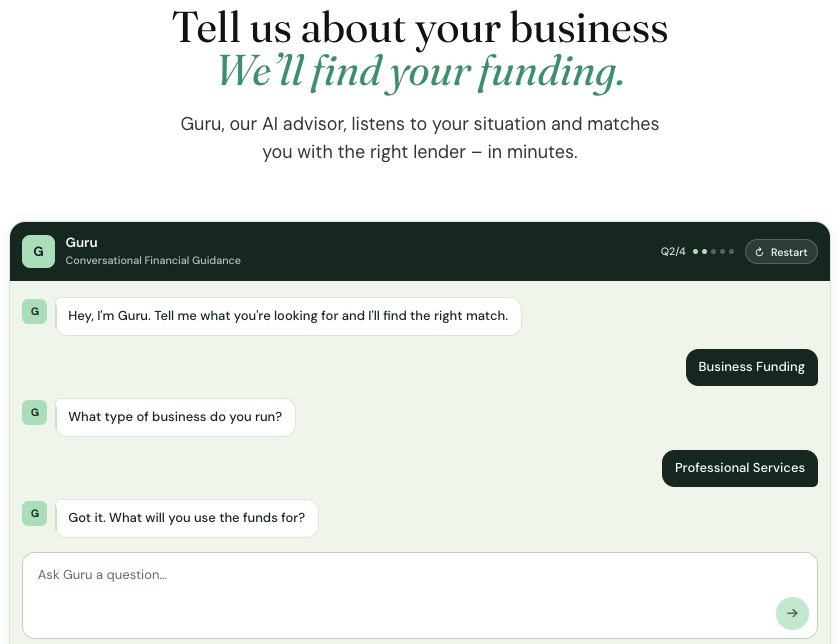
From there, the process is straightforward. A matched partner contacts you directly and walks you through their own underwriting, which may include an appraisal or a UCC filing if collateral is part of the deal. Nothing about the initial match obligates you to accept an offer. If you want to see how the loan types Lending Gurus supports compare, or you’re ready to see what you might qualify for, start a no-obligation match today and review the terms before you move forward with any partner.
This article is general information, not a substitute for advice from a qualified financial advisor. Consult a qualified financial professional about your own circumstances before acting on anything here.
Sources
- U.S. Small Business Administration
- Investopedia — Secured vs. unsecured line of credit
- CFPB — Consumer credit trends: commercial credit on consumer credit reports (2021)
FAQ
How Do You Get a Secured Business Line of Credit?
You apply through a bank, credit union, or online lender, submitting financial statements, tax returns, and documentation of the asset you’re pledging. The lender orders a valuation on the collateral, files a UCC-1 if applicable, and underwrites your business financials before approving a limit. A platform like Lending Gurus can speed the search by matching you to partners that work with secured lines based on your revenue, time in business, and available collateral.
What Would the Monthly Payment Be on a $50,000 Line of Credit?
Monthly payment on a revolving line depends entirely on how much you’ve actually drawn, since you only pay interest and any required principal on the outstanding balance, not the full limit. Rates and repayment structures vary by lender and by whether the line is secured or unsecured, so an exact payment figure isn’t something you can calculate without a specific offer in hand.
Can an LLC Qualify for a Business Line of Credit?
Yes, an LLC can qualify for a secured or unsecured business line of credit as long as it meets the lender’s requirements for revenue, time in business, and cash flow. Most lenders still ask the LLC’s owner for a personal guarantee, since a personal guarantee is standard practice across most small-business lending even when the entity itself is an LLC.
What’s the Easiest Type of Business Line of Credit to Get?
Lines secured by cash, a certificate of deposit, or another highly liquid asset tend to be the easiest and fastest to get approved, since the lender’s risk is minimal and there’s little to appraise. Lines secured by real estate or specialized equipment take longer because of appraisal and title requirements. If you’re not sure which type fits your situation, running a match through Lending Gurus can surface options based on what you actually have to offer as collateral.
