
Collateral is any asset you pledge to guarantee repayment of a business loan. Most lenders accept real estate, equipment, inventory, accounts receivable, or cash, and pledging one of these usually gets you a lower rate, a bigger loan, or both. The tradeoff is real: if you default, the lender can seize and sell whatever you put up.
Table of Contents
- What Can Be Used as Collateral for a Business Loan?
- How Does Collateral Change Your Loan Terms?
- Collateral Requirements by Loan Type
- How Lenders Value Collateral and File Their Claim
- What Happens If You Default, and What Are Your Alternatives?
- How Lending Gurus Helps You Prepare and Match to Lenders
- The Checklist Most Guides Skip
- Ready to See What You Qualify For?
- Sources
- FAQ
What Can Be Used as Collateral for a Business Loan?
Lenders rank collateral by how fast and cleanly they can sell it if you stop paying. That single fact drives almost every rule in this section.
Real estate carries the most weight. Lenders typically lend against your equity, not the full market value, and they order a formal appraisal before approving anything. Equipment and vehicles work too, but only with a clean title. Depreciation eats into value fast, so a five-year-old delivery van secures less than it did when you bought it. Inventory is trickier. Lenders look at how quickly it turns over and whether it’s seasonal, holiday inventory sitting in a warehouse in February is worth less to an underwriter than the identical inventory in October.
Accounts receivable and invoices split into two paths: pledging AR as security on a traditional loan, or selling invoices outright through factoring. They sound similar but carry different legal and tax consequences. Cash and marketable securities are the easiest collateral to value and liquidate, which is why using them tends to produce the most favorable loan-to-value ratios. Some lenders will consider intellectual property or royalty streams, though acceptance varies widely and valuation is harder to pin down.
Common collateral categories include:
- Commercial or investment real estate
- Business equipment, machinery, and vehicles
- Inventory and raw materials
- Accounts receivable and outstanding invoices
- Cash, CDs, and investment accounts
- Intellectual property or royalty agreements (case by case)
When your business doesn’t have enough hard assets, lenders often ask for a personal guarantee instead, or in addition. That puts your personal assets on the line even though the loan is for the business.
How Does Collateral Change Your Loan Terms?
Collateral reshapes three things: your interest rate, how much you can borrow, and your odds of approval. It does this by shifting risk from the lender to you.
Loan-to-value (LTV) is the ratio a lender uses to decide how much they’ll lend against an asset’s value. Real estate often supports a higher LTV because it holds value and sells predictably. Equipment and inventory get a steeper discount, known as a haircut, because they depreciate or become harder to move quickly. Invoice financing advance rates commonly land below 100% of face value for the same reason.
Here’s the general sequence lenders follow when collateral enters the picture:
- They value the asset and apply a haircut based on how liquid it is.
- They calculate maximum loan size using their LTV formula for that asset class.
- They price the rate lower than an unsecured loan would carry, since collateral reduces their exposure if you default.
- They still underwrite your revenue, time in business, and cash flow before final approval.
Pro Tip: Don’t assume collateral alone gets you approved. A lender can hold a lien on a fully paid-off building and still decline you if your monthly revenue doesn’t support the payment.
Collateral lowers risk on paper, but it never replaces a lender’s need to see money moving through your business.
Collateral Requirements by Loan Type
Different loan products come with different collateral expectations baked in.
- SBA loans: The Small Business Administration doesn’t set a fixed collateral rule across every loan. Lenders that issue SBA-backed loans decide collateral requirements themselves and can approve loans with limited or no collateral in some cases. Don’t assume “SBA” means “no collateral needed.” Ask the lender directly.
- Equipment financing: The equipment you’re buying usually serves as its own collateral. Because equipment loses value over time, LTVs run lower than real estate loans, and lenders may want a down payment.
- Invoice financing: Your unpaid invoices back the loan. Lenders also check the creditworthiness of the customers who owe you, not just your own business.
- Commercial real estate loans: Expect a full appraisal, an equity requirement, and close attention to lien priority if you already have a mortgage on the property.
- Lines of credit: Some use a single pledged asset; others use a blanket lien covering most of your business assets, which gives the lender broader claim if you default.
How Lenders Value Collateral and File Their Claim
Before money moves, lenders confirm what an asset is actually worth and lock in their legal right to it.
For real estate and larger equipment, the lender typically orders a professional appraisal, and you usually cover the cost. Vehicle and equipment titles get checked for existing liens before anyone signs off. Once approved, most secured lenders file a UCC-1 financing statement, a public record that establishes their legal claim on the pledged asset. This is standard practice, not a red flag, but it does mean your collateral shows up in state filing records and can affect your ability to pledge the same asset elsewhere.
Steps that typically happen during this process:
- Lender orders an appraisal or valuation
- Title search confirms no competing liens
- UCC-1 filed to perfect the lender’s security interest
- Lender may require ongoing insurance or periodic audits on the collateral
Pro Tip: A clear title with no prior liens and current maintenance records on equipment or vehicles improves your valuation and shrinks the haircut a lender applies.
What Happens If You Default, and What Are Your Alternatives?
Pledging collateral means accepting real consequences if repayment falls apart. Understand them before you sign.
- Repossession or foreclosure: The lender can seize and sell the pledged asset, whether that’s equipment, inventory, or a building.
- Deficiency judgments: If the sale of your collateral doesn’t cover the full loan balance, the lender can still pursue you for the difference.
- Credit damage: Default and any resulting judgment typically shows up on your business credit file and can follow you into future financing.
If pledging assets feels too risky, unsecured loans, invoice factoring (selling invoices outright rather than pledging them), and building stronger business credit first are all worth exploring. When you do need to offer collateral, negotiate the scope. Ask for a lien on a specific asset instead of a blanket lien on everything you own.
How Lending Gurus Helps You Prepare and Match to Lenders
Lending Gurus doesn’t lend money. Guru matches you with vetted lending partners, and those partners decide approvals, rates, and terms, not us. There’s no hard credit pull to get matched.
Before you start, gather your titles, recent appraisals, an inventory list with turnover data, your accounts receivable aging report, and your P&L and bank statements. Having this ready speeds up matching and gets you offers that are easier to compare side by side.
Guru makes the most sense once you already know what you’re pledging and want to see multiple lender options without spending weeks on outreach yourself.
The Checklist Most Guides Skip
Most articles on this topic list asset types and stop there. What actually determines your outcome is documentation readiness, not just what you own.
Here’s what conventional advice underweights: a business owner with a half-paid-off delivery truck and no maintenance records often gets a worse offer than one with a fully depreciated truck and a clean service history. Lenders price uncertainty, not just asset category. The same goes for accounts receivable. An aging report that shows you actually collect on time is worth more to an underwriter than the invoice total itself.
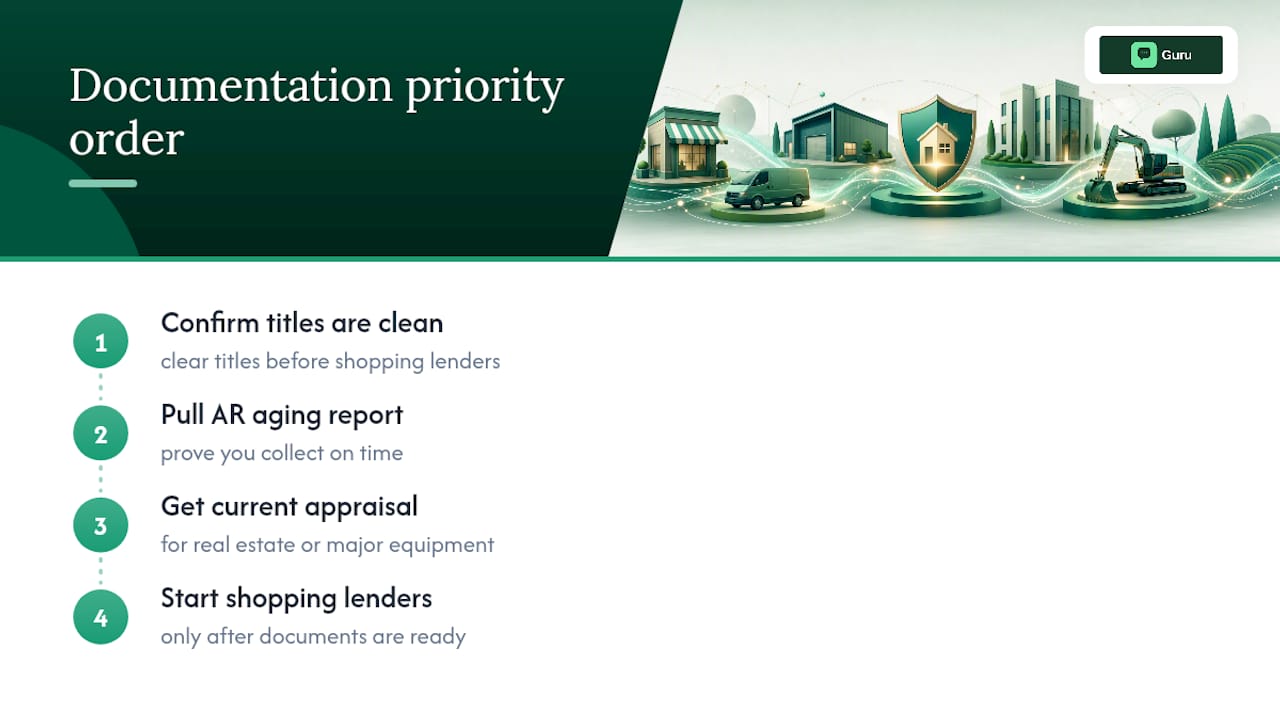
Prioritize this order: confirm your titles are clean, pull your AR aging report, get a current appraisal if real estate or major equipment is involved, and only then start shopping lenders. Business owners who reverse that order, shopping first and scrambling for documents after a lender shows interest, lose weeks and sometimes lose the offer. Collateral matters, but readiness is what turns collateral into a fast approval.
— Chris
Ready to See What You Qualify For?
There are online platforms that offer alternatives to calling banks one by one to find out who accepts your equipment, invoices, or real estate as collateral. Such platforms may ask about your revenue, time in business, and the assets you’re willing to pledge, then match you with vetted lending partners, without a hard credit pull.
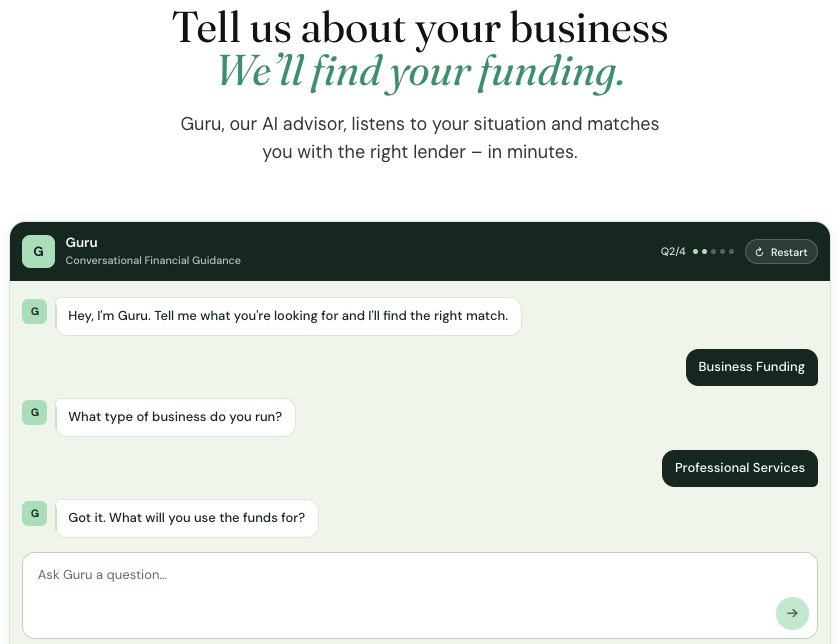
You bring the documents. We bring the matches. If you already know which product fits your situation, start by browsing loan types like equipment financing and lines of credit, or head straight to Lending Gurus to begin a free match today. Every partner sets its own approval decisions, rates, and terms, so what you’re offered depends on the lender, not on us.
This article is general information, not a substitute for advice from a qualified financial advisor. Consult a qualified financial professional about your own circumstances before acting on anything here.
Sources
- Loans – Small Business Administration
- Collateral: What It Is, Types, and How It Works – Investopedia
- The 7 Common Types of Collateral For Loans – Fit Small Business
- Collateral business loans: what they are and common LTV practices – Nav
FAQ
What Can Be Collateral for a Business Loan?
Real estate, equipment, vehicles, inventory, accounts receivable, and cash or investment accounts are the most commonly accepted forms of business loan collateral. Lenders favor whichever asset they can value and sell quickly if you default.
What Is the Payment on a $1,000,000 Business Loan?
The payment depends entirely on the interest rate, term length, and whether the loan is secured or unsecured, none of which is fixed across lenders. Because collateral and creditworthiness vary so much case by case, get a direct quote from a matched lender rather than relying on a generic estimate.
How Do I Qualify for a $200,000 Business Loan?
Lenders weigh your monthly revenue, time in business, and cash flow most heavily, with collateral and credit score as supporting factors rather than the deciding ones. Offering collateral like equipment, real estate, or receivables can improve your odds and terms, but it won’t offset weak revenue on its own.
Can You Use an LLC as Collateral for a Loan?
You can’t pledge the LLC entity itself, but you can pledge assets the LLC owns, such as equipment, real estate, or receivables. Lenders may also require a personal guarantee from the LLC’s owner when business assets alone don’t sufficiently secure the loan.
Does Lending Gurus Require Collateral to Match Me With a Lender?
No. Guru matches you based on your revenue, time in business, and financing needs, and some matched lenders offer unsecured options while others require collateral. There’s no cost to get matched, and Guru performs no hard credit pull during the process.
