
Revolving credit is a reusable line, like a credit card or HELOC, where your available balance refills as you pay it down. An installment loan is a fixed lump sum, like a mortgage or auto loan, repaid in set payments over a set term. Neither type is better by default: revolving credit shows up on your credit report as utilization, which can swing your score fast, while installment loans build a steady payment history that moves your score more slowly.
Table of Contents
- Revolving credit vs installment loans: quick comparison and examples
- How each credit type affects your credit score
- Pros and cons: flexibility, cost, and risk
- How to choose between revolving credit and an installment loan
- Why I think comparing offers beats guessing
- Where these numbers come from
- Sources
- FAQ
Revolving credit vs installment loans: quick comparison and examples
Revolving credit lets you borrow, repay, and borrow again up to a set limit. You get a credit line, not a lump sum, and your monthly payment depends on how much you’ve used. Installment loans work differently: you receive one amount upfront and repay it in fixed payments until the balance hits zero.
Both types report to the credit bureaus, but they behave differently once they’re on your report. Experian explains that installment loans give you a fixed schedule while revolving accounts let you borrow again as you repay, and the examples below show how that plays out in daily life.
- Revolving credit: credit cards, home equity lines of credit (HELOCs), retail store cards.
- Installment loans: mortgages, auto loans, student loans, personal loans.
- Repayment style: revolving balances fluctuate with use; installment payments stay the same each month.
- Typical cost pattern: credit cards often carry higher ongoing APRs than secured installment products like auto loans or mortgages, though your actual rate depends on your lender and credit profile.
The reporting difference matters more than the repayment style. A credit card reports a balance snapshot every month, while an installment loan reports a shrinking balance against an original loan amount, and that distinction drives most of what follows.
How each credit type affects your credit score
Your credit score reacts to revolving and installment accounts in different ways, mostly because of how utilization works. Utilization is the ratio of your reported balance to your credit limit, and myFICO explains that this ratio is a major factor in how amounts owed get scored, separate from whether you pay on time.
One of the most useful levers you have: myFICO notes that making a payment before your statement closing date can lower the balance your card issuer reports that month, which can improve your utilization snapshot without costing you a dime in interest.
Installment loans work on a different axis. They build payment history over time and contribute to your credit mix, the variety of account types on your file, but they don’t trigger the same kind of utilization penalty a maxed-out card does. A large mortgage balance doesn’t hurt your score the way a near-limit credit card balance can, because installment balances are compared to the original loan amount, not treated as available credit you’re “using up.”
A few practical moves follow from this:
- Pay down reported revolving balances before the statement date, not just the due date.
- Avoid closing old revolving accounts if it will shrink your total available credit and raise your utilization ratio.
- Skip opening a new account purely to diversify credit mix. Experian and similar consumer-education sources recommend matching the product to what you actually need, not borrowing to chase a mix bonus.
Pros and cons: flexibility, cost, and risk
Revolving credit gives you flexibility. You draw what you need, when you need it, and some cards offer rewards or cash back. The tradeoff is cost and volatility: CFPB research found that accounts which start revolving often stay that way, with balances persisting for months, and interest can compound fast on uncollateralized balances.
Installment loans trade flexibility for predictability. You know your payment and your payoff date from day one, and secured installment products like auto loans often carry lower rates than unsecured revolving credit. The risk sits on the other side: you get the full amount upfront whether you need it all or not, and secured loans put collateral, like your car or home, on the line if you fall behind.
- Revolving pros: reusable access, potential rewards, no new loan application for each purchase.
- Revolving cons: variable APRs, balances that can persist for months or years, fast utilization swings.
- Installment pros: fixed payments, clear payoff date, often lower rates on secured products.
- Installment cons: one-time amount only, collateral risk on secured loans, less flexibility if your needs change.
Pro Tip: Pay down your card balance a few days before the statement closing date, not the due date, to lower the balance your issuer reports without paying extra interest.
How to choose between revolving credit and an installment loan
Picking between the two starts with how you plan to use the money, not which one sounds better on paper. Run through these questions before you apply for anything:
- Do you need a one-time amount, or repeated access to funds over time?
- Do you want a fixed payoff date, or is ongoing flexibility more useful to you?
- Can your monthly budget handle a payment that might change, or do you need a number that stays the same?
- Will the balance you’re carrying use up a large share of your available credit limit?
Once you know which type fits, compare offers with the same checklist every time:
- Total interest and fees over the life of the loan or the expected revolving period.
- Minimum payment rules, since some revolving accounts set minimums that barely cover interest.
- Whether the account is secured, and what collateral is at risk if you miss payments.
- How the lender reports the account to the credit bureaus, including whether it reports as revolving or installment.
- Any promotional APR details, including when the rate resets and what it resets to.
Estimate a few monthly cost scenarios before you commit, and ask each lender directly how they calculate minimum payments and report your account. Matching platforms can show you several offers side by side, which helps you compare these details without submitting a separate application to every lender.
Why I think comparing offers beats guessing
Most people pick between revolving credit and an installment loan based on which one they’ve heard of, not which one fits their situation. That’s backwards. The better approach starts with the four questions above and works forward to the product, not the other way around.
Lending Gurus is a lead aggregator, not a lender or broker. Guru is a free tool that matches users to vetted lending partners, and it does this without a hard credit pull at the matching stage, which means you can compare personal and business financing options without the score hit of multiple applications.
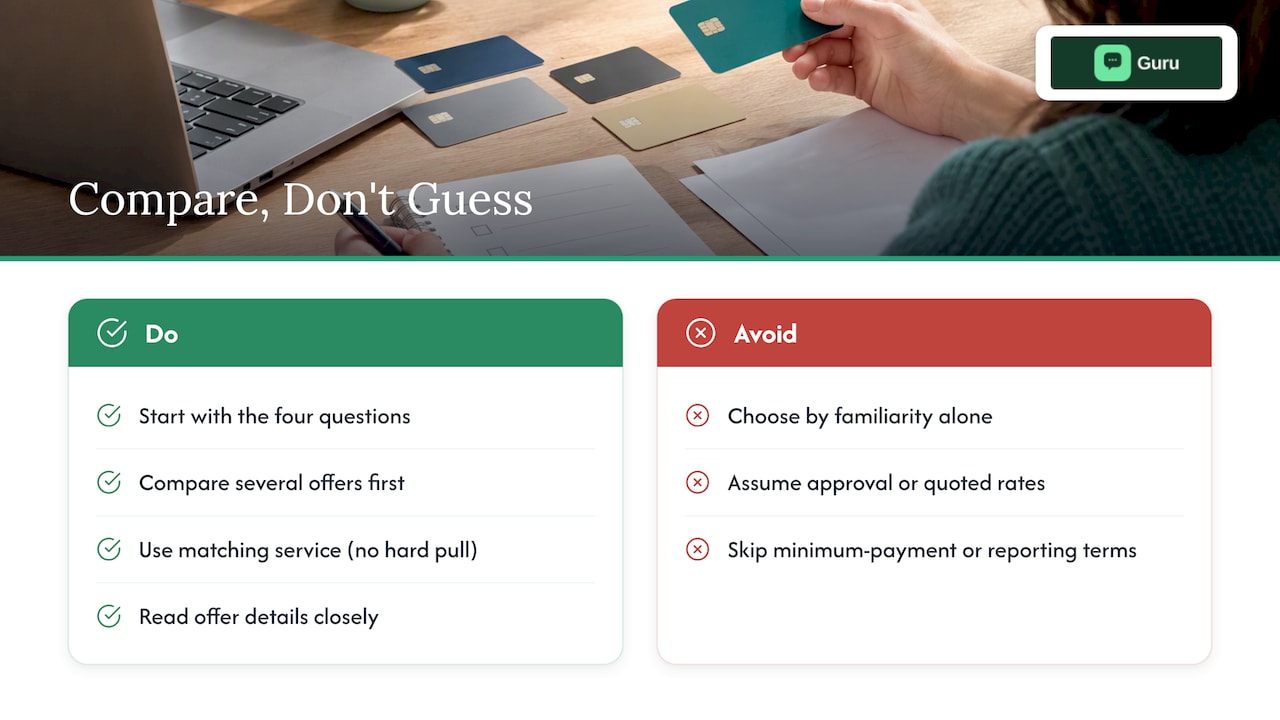
A matching service helps most when you want to see several offers quickly and you’re not sure which product category fits. It helps less if you’ve already settled on a specific lender and just need to apply. Either way, read every offer closely: minimum payment formulas, whether the rate is fixed or variable, and how the account will report.
Partners decide approvals, rates, terms, and amounts. This service does not guarantee approval, specific rates, or funding timelines, and any numbers quoted by lenders should be considered theirs until confirmed in writing.
— Chris
Where these numbers come from
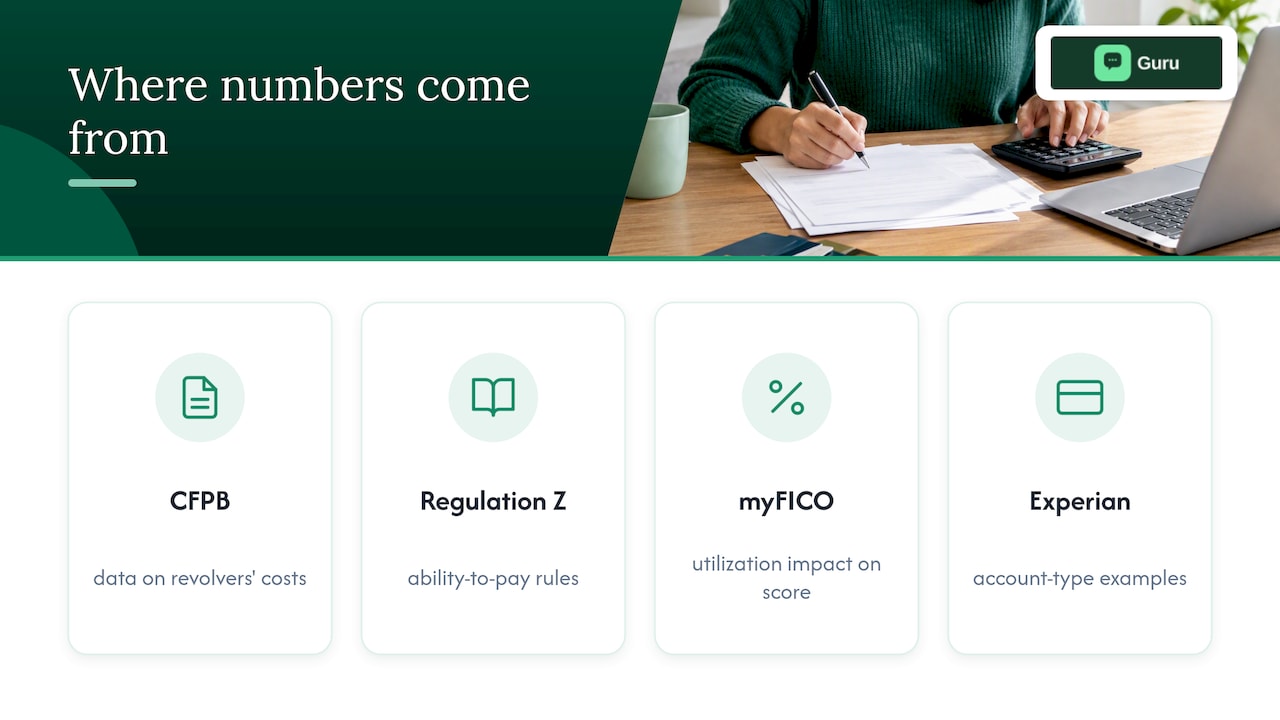
The CFPB’s data on credit card revolvers backs the persistence and cost of revolving balances. Regulation Z explains the ability-to-pay rules behind revolving underwriting. myFICO covers how utilization affects your score, and Experian lays out the basic differences and examples. For more tactics on balancing account types, see this guide on credit mix optimization.
This article is general information, not a substitute for advice from a qualified financial advisor. Consult a qualified financial professional about your own circumstances before acting on anything here.
Sources
- Understanding Accounts That May Affect Your Credit Utilization Ratio | myFICO
- Regulation Z §1026.51 (ability to pay for card accounts) | Consumer Financial Protection Bureau
- Data point: Credit card revolvers | Consumer Financial Protection Bureau
- Installment vs. Revolving Credit: What’s the Difference? | Experian
FAQ
What are the disadvantages of revolving credit?
Revolving credit often carries variable, higher ongoing interest rates, and balances can persist for months if you only make minimum payments. CFPB research found that many revolving accounts stay in a revolving state for extended periods, which adds up in interest charges over time.
What is the difference between revolving payment and installment payment?
A revolving payment changes based on your current balance and the account’s minimum payment formula, while an installment payment stays the same every month for the life of the loan. Experian notes that installment loans are repaid on a fixed schedule, which makes budgeting more predictable than with a revolving line.
Is an auto loan an installment loan or a revolving credit?
An auto loan is an installment loan. You receive a fixed amount upfront to purchase the vehicle and repay it in equal payments over a set term, unlike a credit card or HELOC where the balance can go up and down.
Do installment loans hurt your credit score?
Installment loans themselves don’t carry the same utilization penalty that a near-limit credit card does, since myFICO explains that amounts owed on installment accounts are measured against the original loan amount, not a revolving limit. Missed payments still hurt, since payment history affects every account type on your file.
