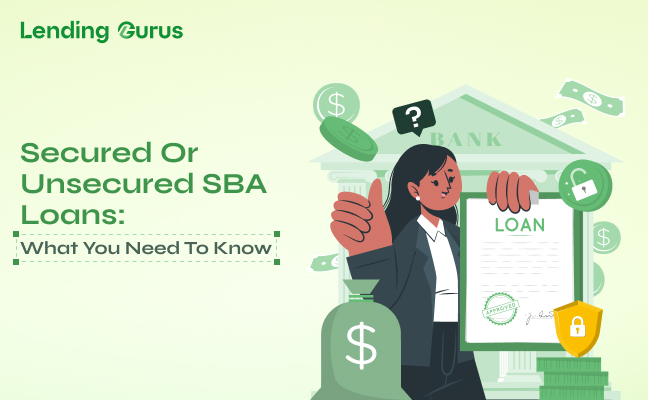
Entrepreneurs seeking to initiate, grow, or maintain their businesses frequently turn to Small Business Administration (SBA) loans as a preferred financing option. Borrowers seeking SBA loans have to select between secured and unsecured loan options. Business owners can achieve informed financial decision-making by examining the distinctions among small business loan types alongside their respective advantages and potential disadvantages.
In this blog, we will explore small business loan secured or unsecured.
What Are SBA Loans?
SBA loans constitute government-supported financial instruments meant to deliver affordable funding options to small enterprises. These loans originate from financial entities including banks and credit unions which obtain a partial guarantee on loan amounts through the SBA. The guarantee mechanism diminishes lender risk allowing small businesses to obtain financing under advantageous conditions including longer repayment terms and lower interest rates.
SBA Secured Loans: Backed by Collateral
Applicants seeking secured SBA loans must provide collateral which serves as a protective measure for lenders against potential borrower repayment defaults. Real estate with equipment and inventory plus accounts receivable and personal assets represent the types of assets used as collateral.
Pros of Secured SBA Loans:
- Lower Interest Rates: The inherent reduced risk of secured loans to lenders causes interest rates to be generally lower which makes secured loans a more economical financing choice.
- Higher Loan Amounts: The existence of collateral enables lenders to sanction significantly larger loan amounts thereby granting businesses access to expanded funding resources.
- Easier Approval Process: SBA Secured loans attract lenders which streamlines the approval process enabling businesses with flawed credit records to access financing.
Cons of Secured SBA Loans:
- Risk of Asset Loss: The lender possesses the authority to confiscate collateral upon borrower default which threatens both business and personal assets.
- Longer Application Process: Verification and valuation procedures for collateral assets extend the duration needed to approve loans.
SBA Unsecured Loans: No Collateral Required
Borrowers can obtain unsecured SBA loans without the necessity of pledging collateral assets. Lenders examine a borrower’s creditworthiness along with business financial records and repayment potential during loan application assessments.
Pros of Unsecured SBA Loans:
- No Asset Risk: Borrowers experience no asset risk because they face no threat to their property or business holdings upon loan default.
- Faster Approval Process: Unsecured loans bypass collateral evaluation resulting in expedited processing and approval times.
- More Accessible for Startups: Startups with limited assets find unsecured loans to be a desirable financing solution.
Cons of Unsecured SBA Loans:
- Higher Interest Rates: Lenders encounter increased risks when dealing with unsecured loans which causes them to impose higher interest rates and extra fees.
- Lower Loan Amounts: Financial institutions frequently impose loan amount restrictions due to their inability to recover assets in default scenarios.
- Stricter Eligibility Requirements: The qualification process demands borrowers present exceptional credit ratings alongside comprehensive business plans and documented revenue records.
Which SBA Loan Type Is Right for Your Business?
Choosing between secured and unsecured SBA loans requires a detailed evaluation of your business’s financial condition with available assets and risk tolerance. Businesses with significant asset holdings that desire extensive funding at reduced interest rates discover secured loans to be their best option. The act of keeping both personal and business assets separate while obtaining an unsecured loan can validate the increased expenses associated with such loans.
Final Thoughts
Understanding the differences between secured and unsecured SBA loans is essential for choosing the right business financing solution. Secured loans provide lower interest rates alongside increased borrowing limits but require collateral which endangers your assets if you fail to repay. Unsecured loans remove collateral requirements while simultaneously requiring higher interest rates and stricter conditions. Assess your enterprise’s financial condition with your credit score and necessary capital to identify the optimal loan choice for your goals.
Looking to expand your small business? Contact Lending Gurus to find the best financing solution for your business growth!