
Yes, your debt-to-income ratio affects whether you qualify for a personal loan. Most lenders treat DTI as one important underwriting signal, not the only one, and they typically prefer lower ratios for approval, with some flexibility for strong applicants. When you apply, lenders add your projected new loan payment into that calculation before making a decision.
Table of Contents
- What is debt-to-income ratio and why do lenders check it?
- How do you calculate your DTI for a personal loan?
- What debts and income does DTI actually include?
- What DTI ranges do personal loan lenders typically accept?
- How can you lower your DTI before applying?
- How Lending Gurus helps when your DTI is borderline
- Get matched without a hard credit pull
- Where to verify DTI guidance yourself
- Sources
- FAQ
What is debt-to-income ratio and why do lenders check it?
Your debt-to-income ratio is the percentage of your gross monthly income that goes toward debt payments. The Consumer Financial Protection Bureau defines it simply: total monthly debt payments divided by gross monthly income, multiplied by 100. If you pay a moderate amount in debts per month and earn a higher amount before taxes, your DTI is roughly one-third.
Lenders use this number as a snapshot of how much room you have to take on new debt. It tells them whether your paycheck can absorb another monthly payment without stretching you too thin. DTI does not work alone. Underwriters weigh it alongside your credit score, your income verification, and sometimes your savings or assets. A high credit score can soften the impact of a higher DTI, and a low DTI can sometimes offset a thinner credit file.
Think of DTI as one piece of a larger picture. It answers a narrow question: can your income cover your obligations? Credit score answers a different question: have you paid your debts reliably in the past? Lenders combine both to decide whether you fit their risk profile.
How do you calculate your DTI for a personal loan?
Calculating your DTI takes a few minutes if you have your numbers ready. Here’s the process lenders expect you to understand before you apply.
- Gather your gross monthly income. Include your salary before taxes, plus any documentable income like alimony, freelance work, or investment payouts.
- List your recurring monthly debt payments. Add minimum credit card payments, auto loans, student loans, and any other fixed obligations, then include the projected payment for the personal loan you’re applying for.
- Divide total debt by total income, then multiply by 100. This gives you your DTI as a percentage.
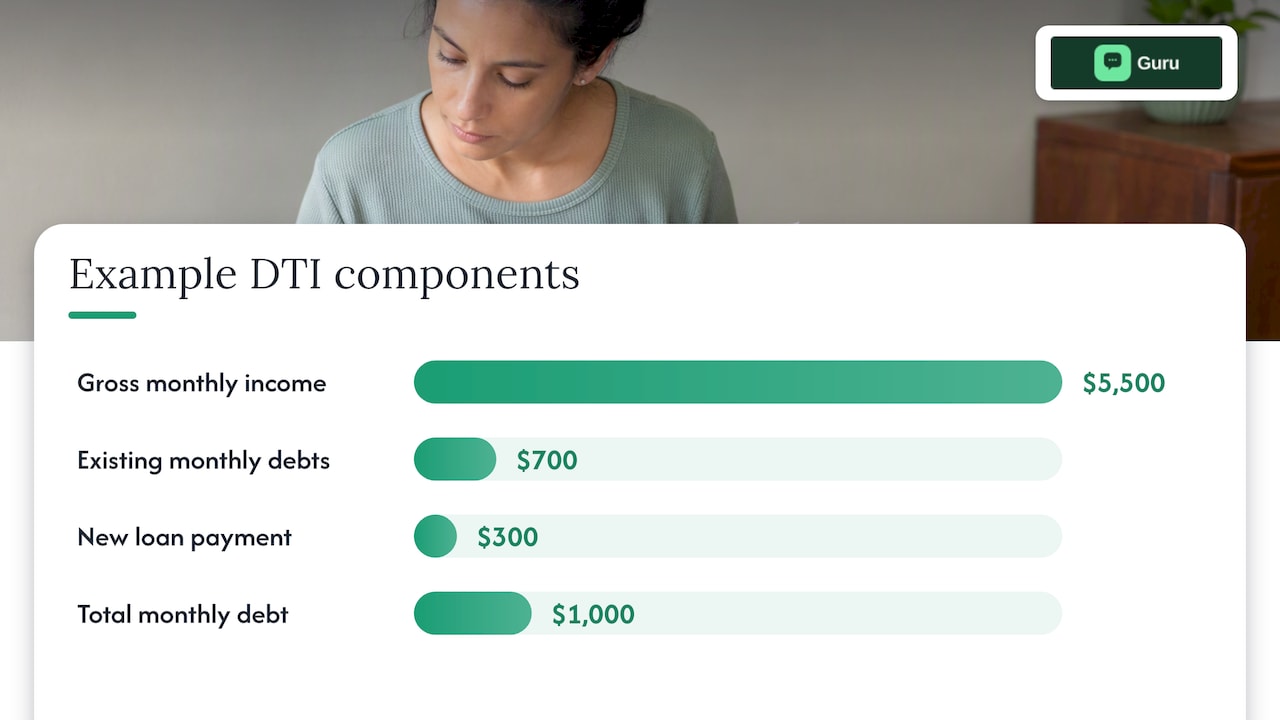
Here’s a worked example. Say your gross monthly income is $5,500. You pay $300 toward a car loan, $150 in minimum credit card payments, and $250 for student loans, totaling $700. You’re applying for a personal loan with an estimated monthly payment of $300. Add that to your existing debts: $700 plus $300 equals $1,000. Divide $1,000 by $5,500 and multiply by 100, and your DTI comes out to about 18%, according to the CFPB’s calculation method.
The CFPB’s debt-to-income worksheet walks through which debts to include and how to organize your income sources before you run the math. Lenders will typically verify your figures with pay stubs, tax returns, or bank statements, so it helps to have documentation ready before you submit an application.
What debts and income does DTI actually include?
Not every expense counts toward your DTI, and lenders are fairly consistent about what they add to the numerator. Recurring, fixed obligations are the focus, not everyday spending.
- Minimum credit card payments across all your cards.
- Auto loan or lease payments.
- Student loan payments, even if you’re on an income-driven repayment plan.
- Child support or court-ordered payments.
- Other installment loans (EMIs) you’re currently repaying.
- The projected monthly payment for the new personal loan you’re seeking.
Groceries, utilities, subscriptions, and other discretionary spending stay out of the calculation. Rent or mortgage payments are usually included for secured lending products, but treatment can vary by lender for unsecured personal loans, so it’s worth confirming how a specific lender handles housing costs.
On the income side, most lenders accept gross monthly income from wages, but documentable non-wage income counts too. Some lenders “gross up” non-taxable income, such as certain benefits, by a percentage to reflect its higher value compared to taxable income, though this practice and the percentage used vary by lender and requires documentation, according to industry guidance on personal loan DTI.
What DTI ranges do personal loan lenders typically accept?
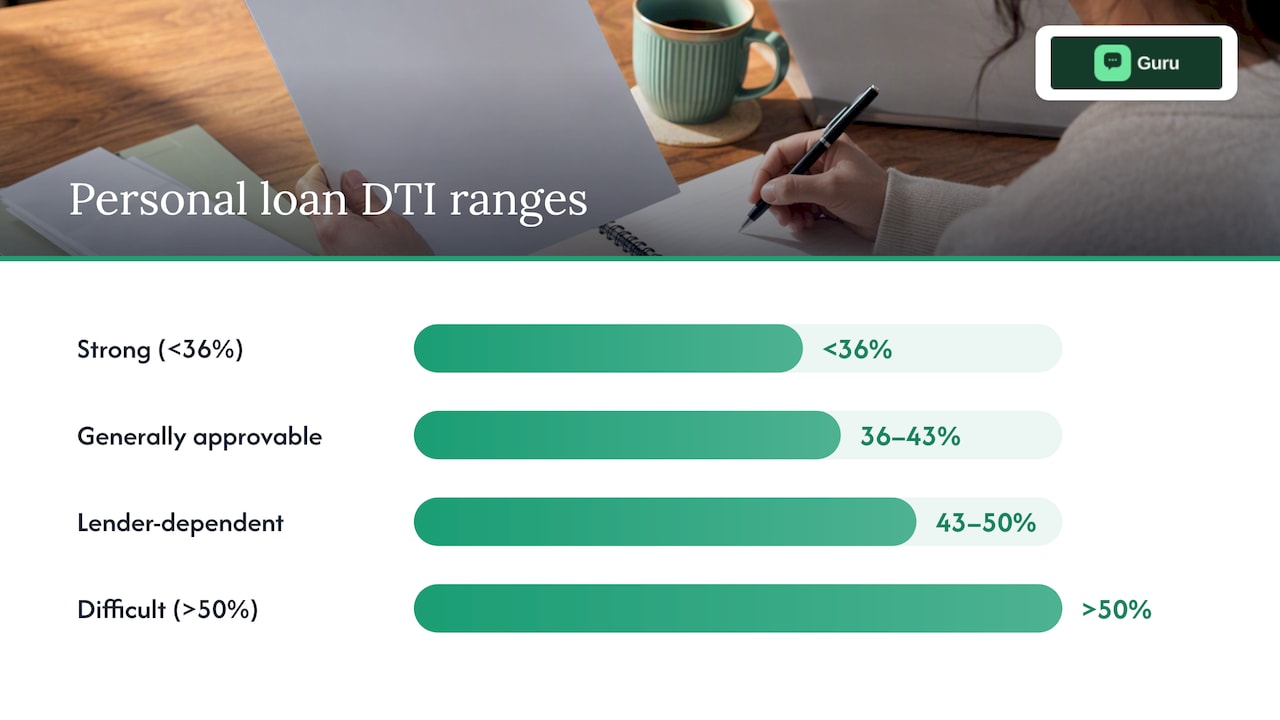
Lenders don’t apply a single hard cutoff, but common patterns show up across the industry. A DTI under 36% is generally viewed as strong and gives you the most flexibility in loan terms. Between 36% and 43%, you’re usually still approvable, particularly with steady income and decent credit. From 43% to 50%, approval becomes more lender-dependent, often requiring compensating factors like a high credit score, savings cushion, or long employment history. Above 50%, approval gets difficult across most lenders, according to industry summaries of personal loan underwriting.
These ranges are patterns, not rules. Regulatory guidance tied to mortgage lending, specifically the CFPB’s Ability-to-Repay and Qualified Mortgage rule, historically referenced a 43% threshold for certain mortgage products, but that framework applies to mortgages, not unsecured personal loans. Personal loan lenders set their own internal thresholds and weigh DTI differently depending on their risk models.
A strong compensating factor can shift an outcome even when your DTI sits above a lender’s typical comfort zone. A high credit score, a co-signer with solid credit, collateral, or a long history of stable income can all move the needle. Because personal loans are usually unsecured, lenders often lean on DTI more heavily than they would for a secured product, since there’s no collateral backing the loan if you default.
How can you lower your DTI before applying?
If your DTI sits in a borderline range, a few targeted moves before you apply can improve your odds. Some deliver quick results, others take more time but strengthen your profile in a lasting way.
- Pay down revolving balances first. Reducing credit card balances lowers your minimum payments, which directly reduces your numerator.
- Pause new credit applications. Opening new accounts adds obligations and can also trigger credit inquiries that complicate your file.
- Consolidate high-rate debt into a lower-payment option, but only when the new monthly payment is genuinely lower than what you’re paying now.
- Document additional income sources if you have them, since verified income raises your denominator.
- Negotiate lower minimum payments with existing creditors where possible, particularly on medical debt or older accounts.
For a more structural change, consider securing the loan with collateral, adding a co-signer with strong credit, or simply waiting until your documented income increases. Any of these can shift how a lender views your application, even if your DTI itself hasn’t moved much.
Pro Tip: To estimate impact, take the payment you’d eliminate or the income you’d add, divide it by your gross monthly income, and you’ll see roughly how many percentage points your DTI could shift before you apply.
How Lending Gurus helps when your DTI is borderline
When your DTI sits in that gray zone, gathering multiple lender opinions can save time. A free conversational advisor gathers your financial information without a hard credit pull, then matches you to vetted lending partners who may be a fit.
The platform is a lead aggregator, not a lender or broker. The matching tool connects users to vetted lending partners. Partners decide approvals, rates, terms, and amounts; no outcome is guaranteed. If your DTI is borderline, using a matching tool can help surface lenders whose underwriting models weigh compensating factors differently than others, saving you from applying blind to institutions unlikely to consider your profile.
— Chris
Get matched without a hard credit pull
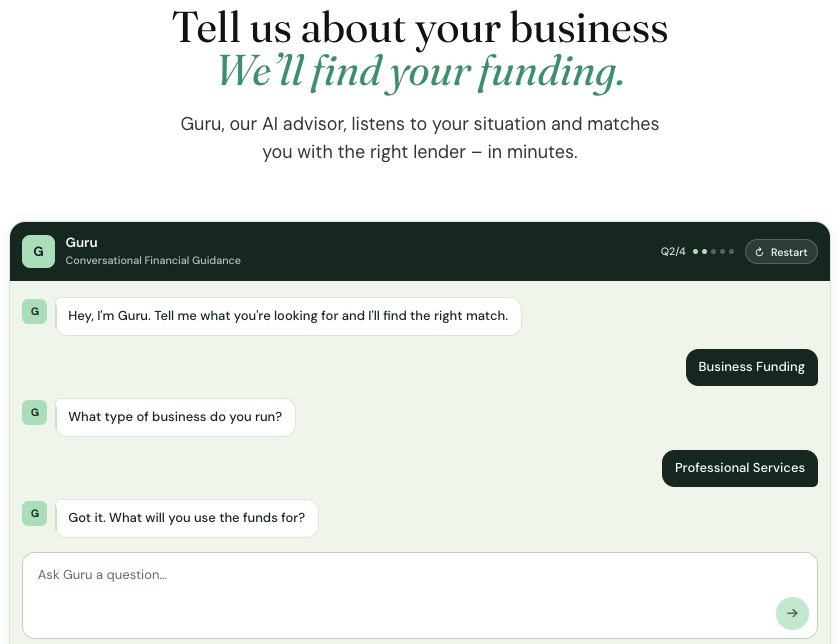
A borderline DTI doesn’t have to mean guesswork about which lender to approach next. Guru asks about your income, your existing debts, and what you need the loan for, then surfaces vetted lending partners that fit your situation, all without a hard credit inquiry.
| What you get | What it means |
|---|---|
| Free conversational advisor | Guru gathers your details without a hard credit pull |
| Matches to vetted partners | The tool connects you to lenders that may fit your profile |
| No obligation | Reviewing a match doesn’t commit you to anything |
| Partner-set terms | Rates, amounts, and approval decisions belong to the lending partner, not Lending Gurus |
Approvals, rates, and repayment terms are always decided by the lending partner, never promised in advance. (This sentence is supported by client facts — no change needed.) If you want to see what’s available for your situation, you can start with Lending Gurus’ conversational advisor or browse the loan types Lending Gurus can match you to before you begin.
Where to verify DTI guidance yourself
For definitions and hands-on tools, the CFPB’s debt-to-income explainer and its accompanying worksheet cover calculation basics. For regulatory context on how DTI factors into underwriting standards, the CFPB’s Ability-to-Repay compliance guide offers a deeper look at how thresholds evolved.
This article is general information, not a substitute for advice from a qualified financial advisor. Consult a qualified financial professional about your own circumstances before acting on anything here.
Sources
- What is a debt-to-income ratio? | Consumer Financial Protection Bureau
- Debt-to-income calculator tool (CFPB)
- What Is a Good DTI for a Personal Loan? – LegalClarity
FAQ
Can you get a VA loan with a 55% debt-to-income ratio?
VA loan guidelines are flexible compared to conventional lending and don’t set a strict DTI cutoff, but a ratio above 50% typically requires stronger compensating factors like residual income or excellent credit. Approval decisions ultimately rest with the individual lender underwriting the VA loan, so outcomes vary case by case.
What income do you need to qualify for a $100,000 personal loan?
There’s no fixed income requirement across lenders, since each sets its own underwriting standards based on DTI, credit history, and overall risk tolerance. A loan of that size typically requires substantial documented income to keep your DTI within an approvable range once the new payment is factored in.
How much would a $100,000 personal loan cost per month?
Monthly payments depend entirely on the interest rate and loan term a lender offers, both of which vary by borrower and lender. Because rates and terms are set by individual lending partners, the only way to know your actual payment is to get a personalized quote.
Is a 35% DTI too high for a personal loan?
It sits below the 36% threshold often cited as a marker of solid repayment capacity, according to industry guidance on personal loan DTI, though individual lender requirements still vary.
