
A vendor line of credit, in this context, is a lender-issued business line of credit: revolving working capital you draw, repay, and draw again, paying interest only on what you use. It fits business owners who need flexible cash on hand rather than a lump sum for one project. The path to getting one runs through eligibility, documentation, comparing offers, and choosing the right lender, all covered below.
Table of Contents
- How a Vendor Line of Credit Works
- What Lenders Look For Before Approving a Line
- How to Apply: Documents, Timeline, and What to Expect
- How to Compare Offers Without Getting Burned by Fees
- How Lending Gurus Helps You Compare Vendor Lines of Credit
- When to Apply Now and When to Wait
- Get Matched to Vetted Lenders With Lending Gurus
- Sources
- FAQ
How a Vendor Line of Credit Works
A business line of credit is a revolving financing product: you draw funds up to an approved limit, pay it back, and draw again without reapplying. Interest applies only to the amount you have drawn, not the full credit limit sitting untouched.
Access usually comes through a bank transfer, a linked debit card, or checks tied to the account. Draw periods vary by lender. Some lines stay open indefinitely as long as the account stays in good standing; others run on a fixed term that requires renewal.
Lines split into two categories:
- Unsecured lines don’t require collateral but often carry higher rates and lower limits.
- Secured lines use business assets or a personal guarantee, which tends to lower the lender’s risk and improve pricing and limits.
A term loan gives you one deposit and a fixed repayment schedule, which suits a single large purchase. A line of credit suits recurring needs: covering payroll during a slow month, buying inventory ahead of a busy season, or bridging the gap between invoicing a client and getting paid.
What Lenders Look For Before Approving a Line
Every lender is answering one question: how likely are you to pay this back? Credit score matters, but it’s rarely the deciding factor on its own.
Here’s what actually carries weight:
- Cash flow and monthly revenue consistency. Lenders want to see steady deposits, not one great month propping up three weak ones.
- Time in business. More history means more data to underwrite against.
- Business and personal credit. Both get pulled, especially for newer businesses without a long credit file.
- Collateral or a personal guarantee. This can unlock higher limits, particularly for unsecured requests that would otherwise get capped.
Cash flow and consistent revenue often outweigh a single credit-score cutoff in how lenders actually underwrite these lines. Traditional banks tend to move slower and demand more documentation, but they usually offer better pricing. Online lenders move faster and accept thinner files, but you’ll often pay more for that speed.
Pro Tip: Pull your last three months of bank statements before you apply and check for consistent deposit patterns. A lender scanning for repayment ability will notice steady cash flow faster than a polished credit score.
How to Apply: Documents, Timeline, and What to Expect
Getting funded quickly comes down to preparation. Here’s the order that works:
- Gather your documents first. Lenders typically want bank statements, tax returns, profit and loss statements, and business formation paperwork, plus a government-issued ID.
- Request a realistic amount. Base your ask on actual monthly revenue and cash flow, not on your biggest hoped-for expense. Lenders size limits against what your business can service, not what you want.
- Clean up your bank feeds before applying. Accurate, well-organized financials speed up underwriting and can shave real time off approval, sometimes turning a multi-week wait into a matter of days.
Reconcile your accounts and fix any categorization errors before you submit anything. A lender who has to ask follow-up questions about messy books is a lender who’s going to take longer to fund you.
How to Compare Offers Without Getting Burned by Fees
The advertised rate on a line of credit almost never tells the whole story. Fees and lien terms can materially change the true cost of borrowing, sometimes more than the interest rate itself.
Before signing anything, check for these cost items:
- Draw fees charged every time you pull funds.
- Maintenance or inactivity fees charged whether or not you use the line.
- Prepayment penalties if you pay off a draw early.
And these risk items:
- UCC liens filed against business assets.
- Blanket liens that cover everything the business owns, not just specific collateral.
- Personal guarantees that put your own assets on the hook.
- Broad default definitions that trigger consequences for reasons beyond missed payments.
Cost callout: Two lines advertising the same headline rate can produce very different bills once fees stack up. A line with a low rate but a per-draw fee and an inactivity charge can cost more over a year than a slightly higher rate with no fees attached, depending on how often you draw and how much sits unused.
Before you sign, ask the lender directly: what fees apply to each draw, do they file a UCC lien, is there an inactivity fee, and are there prepayment penalties? Get the answers in writing. A business that relies on seasonal cash flow, like rental property management, should pay particular attention to inactivity fees on lines that sit unused between busy periods.

How Lending Gurus Helps You Compare Vendor Lines of Credit
Lending Gurus isn’t a lender. It’s a matching service that connects you to vetted lending partners based on your specific situation, and it’s free to use.
The process runs through Guru, a conversational advisor that asks about your business and financing needs without a hard credit pull. That matters if you’re comparing options and don’t want multiple credit inquiries dinging your score before you’ve even settled on a lender.
What Guru actually gives you:
- A faster starting point than researching lenders one by one.
- Fewer forms to fill out repeatedly across different lender websites.
- Matches based on your revenue, time in business, and cash flow, not just a credit score pulled from a bureau.
One thing to keep in mind: Lending Gurus doesn’t approve anything. The partners you get matched to make the actual decisions on approval, rates, terms, and funding amounts. There’s no guaranteed approval and no promised rate, no matter how strong your numbers look going in.
When to Apply Now and When to Wait
Apply now if you’re facing a real cash gap: seasonal inventory that needs buying before the season starts, payroll due before a large invoice clears, or an equipment failure that can’t wait. Waiting in those situations costs you more than a slightly higher rate would.
Wait if your revenue has been inconsistent for the last few months or your cash flow swings widely. Strengthening that picture for 60 to 90 days often gets you a better limit and pricing than applying while the numbers look shaky.
On secured versus unsecured: secured lines get you better pricing and higher limits, but you’re putting an asset or a personal guarantee on the line. Unsecured lines protect your assets but usually cost more and cap lower.
Before you sign anything, ask one direct question: what’s the all-in cost of a typical draw, including every fee? That single number cuts through marketing language faster than any rate comparison.
— Chris
Get Matched to Vetted Lenders With Lending Gurus
Lending Gurus is a different route than cold-calling banks or filling out the same application five times across five lender websites. Instead of researching every lender’s fee schedule and lien terms one by one, you talk to Guru once, and it matches you to vetted partners based on your revenue, time in business, and cash flow, without a hard credit pull.
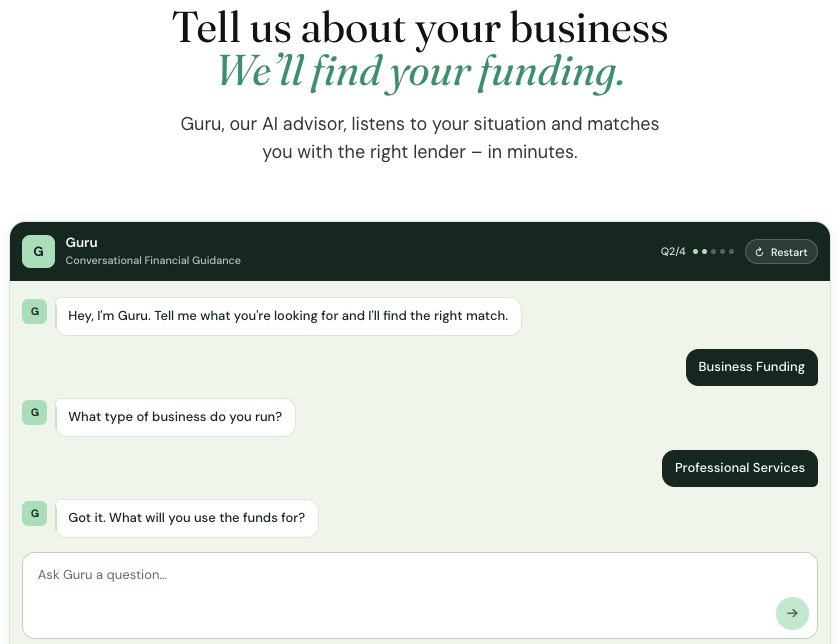
Lending Gurus isn’t a lender and doesn’t approve anything. The lending partners you get matched to decide approvals, rates, and terms, and nothing is guaranteed before that review happens. If you want to explore financing beyond a line of credit, including working capital, equipment financing, or invoice financing, the same matching process applies.
Before you start a session, pull together the documents covered earlier: bank statements, tax returns, and formation paperwork. Having them ready means Guru can match you faster, and you walk into any lender conversation prepared instead of scrambling. Start a conversation with Guru and see what you match to.
Sources
- What Is A Business Line Of Credit And How Does It Work? | Bankrate
- Business line of credit requirements: what to look for before you apply | Drip Capital
- What Is a business line of credit and how does it work? | Capital One
This article is general information, not a substitute for advice from a qualified financial advisor. Consult a qualified financial professional about your own circumstances before acting on anything here.
FAQ
What Is a Vendor Line of Credit?
It’s a lender-issued revolving line of credit for business use. You draw funds as needed, repay them, and draw again, paying interest only on what’s outstanding, similar to how a business line of credit works.
How Much Does Lending Gurus Cost to Use?
Lending Gurus offers a matching service free to business owners. Pricing details for any lending partner appear on their own offer once you’re matched.
Do I Need Good Credit to Qualify?
Credit score is one factor lenders review, but it’s rarely the deciding one. Cash flow and consistent monthly revenue often carry more weight in underwriting than a single score.
How Fast Can I Get Approved?
Timelines vary widely by lender type. Online lenders sometimes fund within a day or two, while banks can take several weeks, and having your documents ready speeds either path up.
Is Lending Gurus a Lender?
No. Lending Gurus matches you to vetted lending partners through Guru, its conversational advisor, without a hard credit pull. The partners you’re matched to decide approvals, rates, and terms, not Lending Gurus.
